
A blood test metabolic panel is one of the most commonly used laboratory tests in preventive and integrative care. Patients often request this test when they want a clearer picture of how their body is functioning, especially when symptoms feel vague or hard to explain. Fatigue, changes in energy, difficulty concentrating, or unexplained shifts in weight can all prompt questions that basic screenings do not always answer. At Thrive Medicine Clinic, a metabolic panel blood test is used as an educational tool as much as a diagnostic one. It helps patients understand how different systems in the body work together and where imbalances may exist.
What a Blood Test Metabolic Panel Measures
A metabolic panel is a group of blood tests that evaluate several core functions in the body. These tests look at markers related to metabolism, fluid balance, and organ health. The most commonly ordered version is the comprehensive metabolic panel, also known as a CMP blood test. Depending on the panel used, results may include measurements related to: ● Blood glucose levels
● Kidney function
● Liver enzymes
● Electrolyte balance
● Protein levels
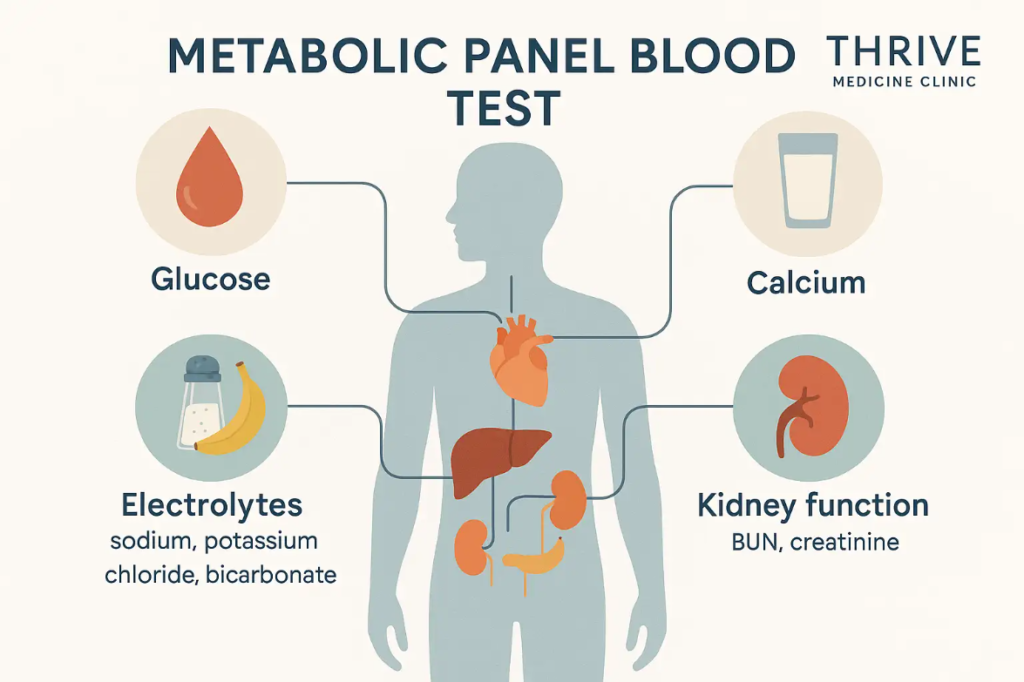
A basic metabolic panel focuses on a smaller set of values, while a comprehensive metabolic panel offers a broader view. Both types of panel tests help clinicians understand how efficiently the body processes nutrients, filters waste, and maintains internal balance. At Thrive Medicine Clinic, these results are reviewed together rather than in isolation. This allows patterns to emerge that may not be obvious when looking at a single lab value.
Why a Metabolic Panel Is Often Used as a First Lab Test
Many clinicians rely on metabolic panel testing as a starting point because it provides a wide overview of health using one blood draw. For patients seeking clarity, this makes the test both efficient and informative. A metabolic panel blood test is often used to: ● Establish a wellness baseline
● Investigate unexplained symptoms
● Monitor existing conditions
● Track changes over time
● Support preventive health planning
Because the test includes markers tied to kidney and liver function, it can also help identify early changes before symptoms appear. This is one reason metabolic panels are commonly used in integrative and preventive care settings.
Understanding Basic vs Comprehensive Metabolic Panels
Patients frequently ask whether they need a basic metabolic panel or a comprehensive metabolic panel. The choice depends on what information is needed. A basic metabolic panel typically includes: ● Glucose
● Calcium
● Sodium and potassium
● Kidney-related markers
A comprehensive metabolic panel includes all of the above, plus additional markers that reflect liver function and protein levels. A CMP blood test is often preferred when a broader understanding of metabolic and organ health is desired. At Thrive Medicine Clinic, recommendations are made based on individual symptoms, health history, and goals. The focus is always on usefulness rather than volume of testing.
How to Prepare for a Metabolic Panel Blood Test
Preparation for a metabolic panel blood test is usually straightforward. In many cases, fasting is required to ensure accurate glucose and metabolic readings. Patients are given clear instructions ahead of time so they know how to prepare. Preparation may include: ● Fasting for a set number of hours
● Drinking water unless advised otherwise
● Informing the clinic about medications or supplements
● Scheduling the test at a convenient time
Following preparation guidelines helps ensure reliable test results. If instructions are unclear, patients are encouraged to ask questions before testing.
How Test Results Are Interpreted in Context
Receiving test results can feel overwhelming, especially when values fall outside standard ranges. At Thrive Medicine Clinic, metabolic panel results are reviewed with context and explanation. Interpretation includes: ● Reviewing trends rather than one-time values
● Considering symptoms alongside lab data
● Accounting for lifestyle factors
● Discussing what is meaningful and what is not
A value slightly above or below a reference range does not always indicate a problem. Likewise, normal values do not always mean nothing is happening. This is why clinical interpretation matters. Patients are encouraged to understand what each marker reflects about kidney function, liver health, electrolyte balance, and metabolic processes. This collaborative approach helps patients feel informed rather than confused.
When a Metabolic Panel May Be Helpful
A blood test metabolic panel can be useful in many situations. Some patients request testing as part of routine wellness care, while others seek answers to specific concerns. Testing may be helpful if you: ● Feel persistently fatigued
● Notice unexplained changes in energy or focus
● Want baseline wellness data
● Are monitoring an existing condition
● Are starting or adjusting medications
● Are interested in preventive care
The decision to test is always individualized. At Thrive Medicine Clinic, patients are guided through whether testing fits their current health priorities.
Using Metabolic Panel Testing to Support Informed Care
A blood test metabolic panel offers insight into how your body is functioning behind the scenes. When reviewed thoughtfully, it can support clearer decision-making, preventive care, and a better understanding of your health. At Thrive Medicine Clinic, metabolic panel testing is paired with education and context so patients know what their results mean and how they fit into a broader wellness plan. If you are researching whether testing makes sense for you, learning more about how metabolic panels are used in clinical care is a valuable first step.
Interested in learning more?
Visit the metabolic panel blood test service page or schedule a consultation with Thrive Medicine Clinic to discuss whether this testing aligns with your health goals.
Inadequate instructions for questions can lead to confusion and miscommunication. For clear guidance, please refer to our detailed resources or contact our support team for assistance.
What does a comprehensive metabolic panel test for?
A comprehensive metabolic panel tests for various substances in your blood, including glucose, electrolytes, proteins, and waste products, to assess your metabolic health and organ function, providing crucial insights into your overall well-being.
How to prepare for a metabolic panel?
Preparing for a metabolic panel involves fasting for 8 to 12 hours prior to the test, staying hydrated by drinking water, and avoiding alcohol and strenuous exercise the day before. Always consult your healthcare provider for specific instructions.
What are the benefits of a metabolic panel?
The benefits of a metabolic panel include providing critical insights into your metabolic health, helping to identify potential health issues early, and guiding personalized preventive care strategies for better overall wellness.
How often should I get a metabolic panel?
The frequency of getting a metabolic panel depends on individual health needs and risk factors. Generally, it's recommended to have this test annually or as advised by your healthcare provider to effectively monitor your metabolic health.
What do abnormal metabolic panel results indicate?
Abnormal metabolic panel results indicate potential health issues related to metabolic function, such as diabetes, kidney disease, liver dysfunction, or electrolyte imbalances. These results warrant further investigation and discussion with a healthcare provider for appropriate management.
Can I get a metabolic panel without a doctor?
It is possible to get a metabolic panel without a doctor, as some clinics offer direct access testing. However, consulting with a healthcare professional is recommended for proper interpretation and guidance on results.
What is included in a comprehensive metabolic panel?
The components included in a comprehensive metabolic panel are essential for assessing your metabolic health. This panel typically measures glucose levels, electrolyte balance, kidney function, and liver enzymes, providing a broad overview of your body's chemical balance and metabolism.
How long does it take to get results?
The timeframe for receiving results from a metabolic panel blood test typically ranges from 1 to 3 business days. However, this may vary based on the specific tests conducted and the laboratory's processing times.
What is the cost of a metabolic panel test?
The cost of a metabolic panel test varies depending on the clinic and insurance coverage, typically ranging from $100 to $300. It's best to check with Thrive Medicine Clinic for specific pricing and any potential insurance benefits.
Are there any risks with blood tests?
The risks associated with blood tests are generally minimal. They may include slight discomfort, bruising, or bleeding at the site of the needle insertion, but serious complications are rare.
How does a metabolic panel help my health?
A metabolic panel helps your health by providing essential insights into your body's metabolic functions, enabling early detection of potential health issues and guiding personalized preventive care strategies.
What lifestyle changes can improve metabolic health?
The lifestyle changes that can improve metabolic health include maintaining a balanced diet rich in whole foods, engaging in regular physical activity, managing stress effectively, ensuring adequate sleep, and staying hydrated.
What should I discuss with my doctor after results?
After receiving your results, you should discuss what the findings indicate for your health, any necessary lifestyle changes, and whether further testing or treatment is required to optimize your metabolic health.
How does hydration affect metabolic panel results?
Hydration significantly impacts metabolic panel results. Proper hydration helps ensure accurate measurements of electrolytes, glucose, and kidney function, while dehydration can lead to falsely elevated or decreased levels, potentially misguiding health assessments.
What medications can affect metabolic panel outcomes?
Certain medications can significantly affect metabolic panel outcomes. Common examples include diuretics, steroids, and certain antibiotics, which may alter glucose, electrolyte, and liver enzyme levels, potentially leading to misleading results. Always inform your healthcare provider about any medications you are taking before the test.
Can I eat before a metabolic panel test?
Eating before a metabolic panel test is generally not recommended. It is best to fast for at least 8-12 hours prior to the test to ensure accurate results.
What is the difference between metabolic panels?
The difference between metabolic panels lies in the specific tests included and the health aspects they evaluate. Comprehensive panels assess a wider range of metabolic functions, while basic panels focus on essential markers, helping tailor health insights and management strategies.
How to interpret metabolic panel results?
Interpreting metabolic panel results involves analyzing various measurements, such as glucose, electrolytes, and kidney function markers, to assess your overall metabolic health and identify potential issues that may require further investigation or management.
What follow-up tests may be needed after a panel?
Follow-up tests that may be needed after a metabolic panel include specific tests for glucose tolerance, lipid profiles, or hormone levels, depending on initial findings and your healthcare provider's recommendations.
How does age affect metabolic panel results?
Age affects metabolic panel results by influencing various biomarkers, such as glucose, cholesterol, and hormone levels, which can change as the body ages. These variations can provide important insights into an individual's health status and risk factors.
What conditions can a metabolic panel help diagnose?
A metabolic panel can help diagnose conditions such as diabetes, kidney disease, liver disease, and electrolyte imbalances. It provides valuable insights into your metabolic health, aiding in the early detection and management of these issues.
What is the significance of glucose levels?
The significance of glucose levels lies in their role as key indicators of metabolic health. Abnormal glucose levels can signal conditions such as diabetes or insulin resistance, highlighting the importance of monitoring them for effective preventive care.
How does cholesterol factor into metabolic health?
Cholesterol plays a crucial role in metabolic health as it is essential for hormone production, cell membrane integrity, and overall energy metabolism. However, imbalanced cholesterol levels can lead to cardiovascular issues and metabolic disorders, highlighting the need for regular monitoring.
What does liver function indicate in a panel?
Liver function in a panel indicates the health of the liver by measuring enzymes, proteins, and substances produced by the liver. Abnormal results can signal liver disease, bile duct obstructions, or other metabolic issues.
How can I find a testing location nearby?
To find a testing location nearby, you can visit our website and use the location finder tool or contact our clinic directly for assistance in locating the nearest facility offering metabolic panel blood tests.
What is the role of electrolytes in health?
The role of electrolytes in health is vital as they help regulate nerve function, muscle contractions, hydration, and acid-base balance in the body. Proper electrolyte levels are essential for overall metabolic health and optimal bodily functions.
How does a metabolic panel relate to diabetes?
The metabolic panel is crucial in understanding diabetes as it measures key indicators like glucose levels and lipid profiles. These results help assess metabolic health and guide diabetes management and prevention strategies.
What are common misconceptions about metabolic panels?
Common misconceptions about metabolic panels include the belief that they only measure glucose and cholesterol levels. In reality, these panels assess a range of factors, including electrolytes, kidney function, and liver enzymes, providing a comprehensive view of metabolic health.
How can I monitor my metabolic health at home?
Monitoring your metabolic health at home can be achieved through regular self-assessments, including tracking your weight, measuring waist circumference, and monitoring dietary habits. Additionally, utilizing at-home blood glucose and cholesterol testing kits can provide valuable insights into your metabolic status.
metabolic lab test, what tests are in a metabolic panel, metabolite blood test