
Many women in the Houston Heights area start to notice unfamiliar changes as they move through their late 30s and 40s. Sleep feels less restful, moods shift without warning, periods become unpredictable, and hot flashes show up at the most inconvenient times. These changes are common signs of perimenopause, the transition leading up to menopause, and they can affect how you feel at work, at home, and in your relationships.
At Thrive Medicine in Houston Heights, we partner with women who want clear answers and thoughtful support. Our hormone replacement therapy for perimenopause focuses on restoring hormonal balance, easing disruptive symptoms, and helping you feel more like yourself again. With careful evaluation, personalized treatment, and ongoing guidance, you do not have to navigate this transition on your own.
Perimenopause in Your 40s: What Is Happening in Your Body
Perimenopause is the time when hormone levels begin to shift before menstrual periods stop completely. For many women, it starts in the 40s, although some notice changes earlier. Estrogen and progesterone levels rise and fall in new patterns, which can make cycles shorter, longer, heavier, or more irregular.
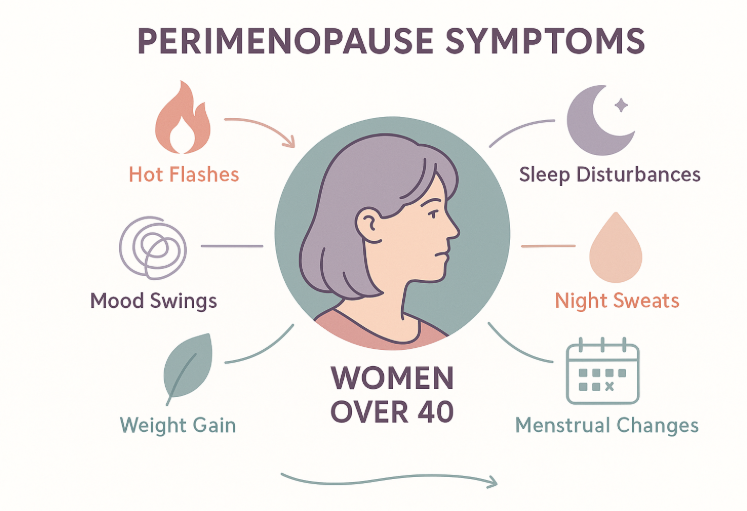
During this time, you might notice:
These changes are linked to fluctuating estrogen and other hormones, not a lack of willpower or resilience. Understanding that there is a hormonal reason behind your symptoms can be reassuring and can guide you toward the right type of support.
At Thrive Medicine, we look at perimenopause as an opportunity to reassess your health. We talk through your full story, including sleep, stress, nutrition, movement, and family history, so that hormone therapy, if recommended, is part of a larger plan for long-term wellness.
Common Perimenopause Symptoms Women Notice First
Perimenopause symptoms can affect both body and mind. Some women notice only a few mild changes, while others feel that nearly every area of life is touched by hormonal shifts. Common symptoms include:
How Hormone Replacement Therapy for Perimenopause Works
Hormone replacement therapy, often called HRT or menopausal hormone therapy, is a treatment that supplements the hormones your body is no longer producing in steady amounts. For perimenopause, the goal is to reduce disruptive symptoms, support bone and heart health, and improve daily comfort while using the lowest effective dose.
Types of Hormone Therapy Used in Perimenopause
Depending on your needs and medical history, your Thrive Medicine provider may discuss several options, such as:
In some situations, low-dose testosterone or other medications may be considered to support libido, energy, or muscle mass. Your provider will talk with you about whether that is appropriate based on your lab results and symptoms.
Benefits and Possible Risks
Many women report meaningful relief from:
Is Hormone Replacement Therapy Right for You
The decision to start hormone replacement therapy for perimenopause is personal. Rather than guessing or relying on generic approaches, you deserve clear information and a plan that respects your goals. You may want to talk with a healthcare provider if you are dealing with frequent hot flashes or night sweats that disrupt your routine, waking up tired even after a full night of sleep, or mood changes that affect your work or relationships.
It can also be helpful to schedule a visit if you have noticed vaginal dryness or pain with intimacy, feel that your symptoms are limiting the activities you enjoy, or are simply curious about how hormone therapy might support your bone and heart health as you age.
What Happens during an HRT Evaluation
During your visit, we take time to:
1. Listen to your story. You can describe your perimenopause symptoms, cycle changes, stress level, and health concerns in your own words.
2. Review your health history. We look at previous pregnancies, surgeries, medications, family history of breast cancer or blood clots, and any current conditions such as migraines or high blood pressure.
3. Order targeted lab testing. Blood work helps us understand your hormone levels and overall health. We may review estrogen, progesterone, testosterone, thyroid function, and markers related to cholesterol or blood sugar.
4. Discuss all treatment options. Hormone replacement therapy may be one option among several. Nonhormonal medications, nutritional changes, and lifestyle support are also considered.
You are part of every decision. Our team explains benefits, potential risks, and what to watch for once therapy begins, so you feel informed and supported rather than rushed.
If you are unsure whether you are ready for hormone therapy, an evaluation can still be helpful. Understanding where you are in the perimenopause transition can reduce worry and give you a clearer plan for the months and years ahead.
Personalized Perimenopause Care at Thrive Medicine in Houston Heights
Thrive Medicine in Houston Heights was created for people who want thoughtful, modern care in a calm, welcoming environment. Our team focuses on regenerative and performance medicine, including hormone optimization, so that women can move through perimenopause with more comfort and confidence.
Your Personalized HRT Plan
If hormone replacement therapy is a good fit, we design a plan tailored to you. That plan can include:
You will always know how to reach our team with questions between visits. Perimenopause is not a one-time event, and your care should adapt as your needs change.
Caring Support for Every Stage
Many of our patients say they feel seen and heard from the moment they walk through the door. That is by design. We believe personalized medicine works best when paired with genuine connection and clear education, so you can make confident choices about your health.
If you are in Houston Heights or the surrounding area and are ready to address perimenopause symptoms, we invite you to connect with Thrive Medicine: