
Bladder leakage can show up in small ways. A few drops when you cough. Leakage during a workout. A sudden urge that makes it difficult to reach the bathroom in time.
Those symptoms are common, but they should not automatically be dismissed as a normal part of childbirth, aging, or getting older.
EMSELLA uses high-intensity focused electromagnetic technology to stimulate the pelvic-floor muscles while you remain fully clothed in a specialized chair.
Thrive Medicine Clinic offers EMSELLA in Houston Heights for adults interested in a noninvasive approach to pelvic-floor rehabilitation and urinary-incontinence concerns.
What Is EMSELLA?
EMSELLA is a noninvasive pelvic-floor therapy that uses high-intensity focused electromagnetic, or HIFEM®, energy to stimulate repeated pelvic-floor muscle contractions.
You remain seated and fully clothed during the session.
The purpose is to stimulate and re-educate weakened pelvic-floor muscles and help restore neuromuscular control involved in bladder function.
BTL describes EMSELLA for rehabilitation of weak pelvic muscles and restoration of neuromuscular control in male and female urinary incontinence. The current FDA 510(k) summary for the BTL device lists the same intended use.
EMSELLA does not require surgery, needles, or an internal applicator.
But it is not automatically appropriate for every type of bladder or pelvic-floor symptom.
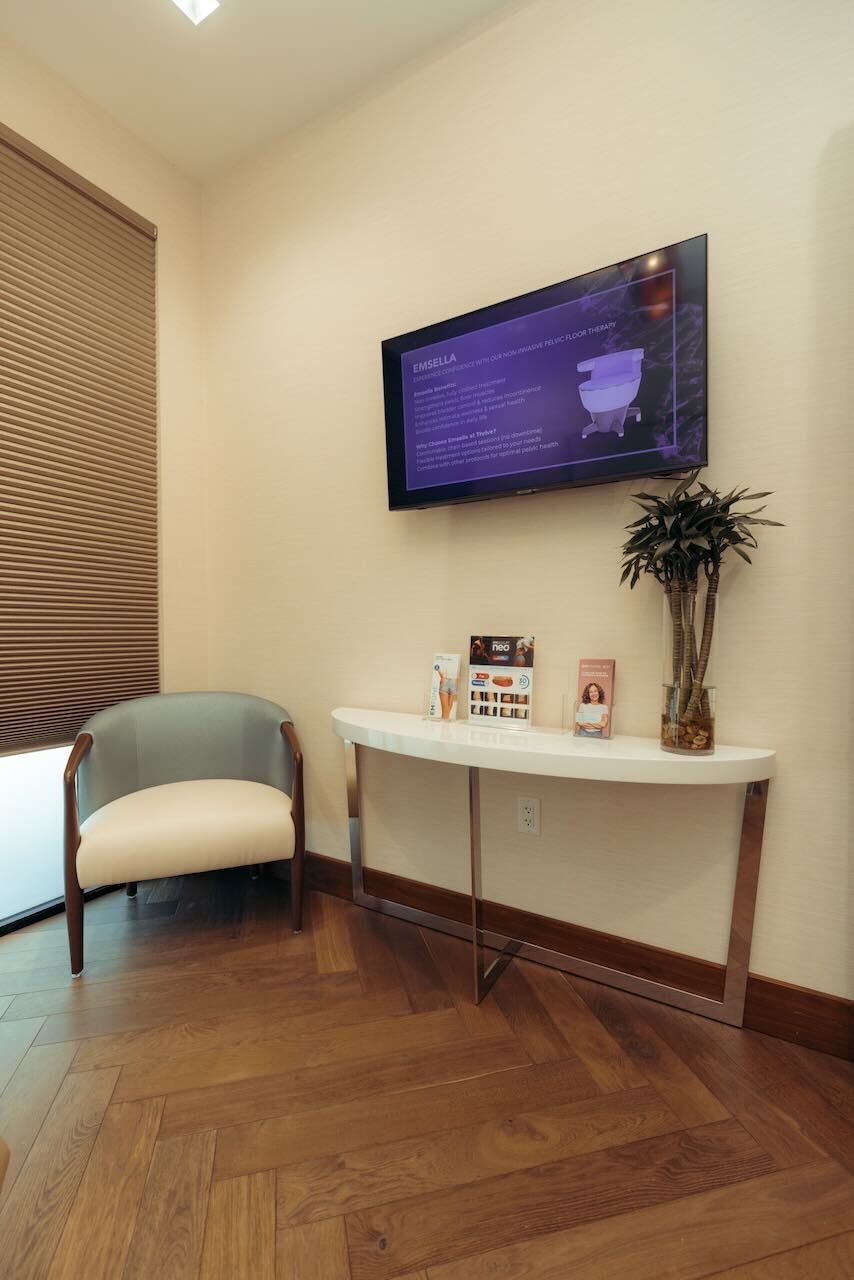
What Does the Pelvic Floor Actually Do?
The pelvic floor is a group of muscles and supporting tissues at the base of the pelvis.
These muscles help support structures such as the bladder and rectum and play an important role in urinary control.
When pelvic-floor muscles become weak or lose coordination, bladder leakage can occur.
Pelvic-floor muscle training such as Kegel exercises is commonly used to strengthen these muscles when weakness is part of the problem. NIDDK notes that pelvic-floor exercises can help both women and men with urinary leakage.
EMSELLA approaches the same muscle group using externally delivered electromagnetic stimulation.
What Symptoms May Lead Someone to Consider EMSELLA?
People commonly begin researching EMSELLA because they notice symptoms such as:
These symptoms can have different causes.
That is why identifying the type of urinary incontinence matters before simply assuming the pelvic floor needs more strengthening.
Stress, Urgency & Mixed Incontinence
Urinary incontinence simply means involuntary urine leakage.
But there are different patterns.
Stress Urinary Incontinence
Stress urinary incontinence is leakage associated with physical pressure or exertion.
Examples include leaking while:
- Coughing
- Sneezing
- Laughing
- Running
- Jumping
- Exercising
- Lifting
Urgency Urinary Incontinence
Urgency incontinence involves a sudden strong urge to urinate that is difficult to control.
Someone may feel as though they need to find a bathroom immediately and may leak before reaching it.
Mixed Urinary Incontinence
Mixed incontinence includes characteristics of both stress and urgency incontinence.
ACOG identifies stress, urgency, and mixed incontinence as three major categories of urinary incontinence in women.
Understanding which pattern you experience can help guide a more useful conversation about therapy.
How Does EMSELLA Strengthen the Pelvic Floor?
During an EMSELLA session, electromagnetic energy stimulates nerves involved in pelvic-floor muscle contraction.
This produces repeated involuntary contractions while you remain seated on the device.
BTL describes the technology as inducing thousands of Kegel-like contractions during a session. These contractions are intended to help re-educate weak pelvic-floor muscles and restore neuromuscular control.
The important distinction is that the contractions occur without requiring you to voluntarily perform each repetition. This can be particularly relevant for people who:
● Have difficulty identifying the correct pelvic-floor muscles
● Struggle to perform consistent pelvic-floor exercises
● Have weakness that makes voluntary contractions difficult
● Want to discuss another noninvasive option for pelvic-floor rehabilitation
● Tissue position
● Volume loss
● Natural anatomy
EMSELLA should not be viewed as a reason to ignore pelvic-floor exercises or physical therapy when those approaches are appropriate.
Strengthening Is Not Always the Right Answer
This is one of the most important things to understand before choosing EMSELLA. Pelvic-floor symptoms do not always mean the muscles are weak. Some people have pelvic-floor muscles that are overly tight, overactive, painful, or difficult to relax. That can occur with conditions involving pelvic pain, muscle spasm, painful intercourse, or certain bladder-pain syndromes. In those situations, simply adding more strengthening may not be the right approach. NIDDK notes that people with pelvic-floor spasm associated with interstitial cystitis or bladder-pain syndrome may be referred for specialized pelvic-floor physical therapy focused on stretching and relaxation, and that strengthening exercises may not be appropriate unless directed by a therapist. This is why Thrive should begin with your symptoms and history rather than assuming every pelvic-floor concern requires stronger contractions.
What Does the Research Say About EMSELLA?
Published research on HIFEM therapy for urinary incontinence is encouraging, but it should be interpreted realistically.
A 2025 systematic review and meta-analysis evaluated seven studies of HIFEM therapy in women with urinary incontinence.
The analysis found improvements in urinary-incontinence episodes and symptom scores compared with control groups.
However, the authors also noted substantial differences between studies, possible bias, and the need for better-quality randomized trials before drawing stronger conclusions.
A prospective study published in 2026 followed 57 women with stress, mixed, and urgency urinary incontinence who completed six HIFEM sessions over three weeks.
The researchers reported significant improvements in urinary-incontinence symptoms and quality-of-life scores after therapy and at three-month follow-up.
They also emphasized that larger comparative trials with longer follow-up are still needed.
A balanced way to describe the evidence is:
HIFEM is a promising noninvasive option for selected urinary-incontinence patients, but individual outcomes vary and long-term evidence is still developing.
EMSELLA for Women With Bladder Leakage
Pelvic-floor weakness can affect women at different stages of life.
After Pregnancy and Childbirth
Pregnancy and childbirth can place significant demands on the pelvic floor.
Some women notice leakage soon after delivery, while others become more aware of symptoms years later.
During Menopause and Aging
Changes in hormones, connective tissue, muscle strength, and aging can influence bladder control and pelvic-floor function.
During Exercise
Running, jumping, lifting, and other physical activity can expose stress urinary incontinence that is less noticeable during normal daily activities.
EMSELLA may be worth discussing when weakened pelvic-floor muscles appear to contribute to urinary leakage.
But postpartum or menopausal symptoms should not automatically be assumed to come from weakness alone.
Can Men Use EMSELLA?
Yes.
The FDA-cleared intended use includes both male and female urinary incontinence.
One reason men may investigate pelvic-floor rehabilitation is urinary leakage following prostate procedures.
Pelvic-floor muscles help contribute to urinary control in men as well as women.
EMSELLA can stimulate these muscles noninvasively while the client remains seated and fully clothed. Men experiencing ongoing urinary leakage should still receive appropriate medical evaluation because symptoms can have different causes.
Can EMSELLA Help After Prostate Surgery?
Urinary leakage can occur after prostate surgery because structures involved in urinary control have been affected.
Pelvic-floor rehabilitation is one strategy used to improve urinary control after prostate procedures.
Emerging research has also evaluated EMSELLA in men with post-prostatectomy urinary incontinence.
The current evidence is much smaller than the evidence base in women, so Thrive should present this as an area worth discussing rather than as a guaranteed post-surgical solution.
A consultation should include the type and timing of prostate procedure, severity of leakage, current rehabilitation plan, and relevant medical history.
Is EMSELLA Better Than Kegel Exercises?
That is not the most useful comparison.
Kegel exercises are voluntary pelvic-floor contractions.
EMSELLA causes repeated pelvic-floor contractions using electromagnetic stimulation.
Kegel exercises
Kegels have important advantages:
- They can be practiced at home
- They help develop voluntary control
- They cost nothing
- They can remain part of a long-term pelvic-floor program
EMSELLA
EMSELLA offers something different:
- It does not require you to voluntarily produce every contraction
- The stimulation reaches pelvic-floor musculature while you remain seated
- The session is supervised within the clinic
NIDDK notes that learning to correctly contract and relax the pelvic floor can take practice and that a health professional or pelvic-floor therapist can help verify technique.
The two approaches do not have to be treated as competitors.
Is EMSELLA the Same as Pelvic-Floor Physical Therapy?
No.
Pelvic-floor physical therapy can evaluate much more than muscle strength.
Depending on the individual, therapy may address:
A pelvic-floor physical therapist can also determine whether someone is contracting the correct muscles and whether strengthening or relaxation is more appropriate.
EMSELLA specifically provides electromagnetic muscle stimulation.
For some people, pelvic-floor physical therapy may be more appropriate.
For others, EMSELLA may be an option worth discussing.
In some situations, the two approaches may complement one another.
Not Sure What Type of Bladder Leakage You Have?
You do not need to diagnose yourself before contacting Thrive Medicine Clinic.
Tell us when leakage happens, how often it occurs, and what activities seem to trigger it. We can discuss whether pelvic-floor weakness appears to be part of the problem and whether EMSELLA is an option worth considering.
What Happens During an EMSELLA Session?
EMSELLA is performed while you sit on the specialized chair fully clothed.
During the session, you may feel:
Clinical research helps explain why later evaluation matters.
The contractions occur automatically in response to the electromagnetic stimulation. There are no needles, incisions, or internal applicators. BTL states that clients can return to normal activities after the session.
How Long Does EMSELLA Take?
BTL’s current protocol describes sessions lasting approximately 30 minutes.
The manufacturer commonly recommends a course of six sessions scheduled twice per week, although the individual plan should be determined by the provider.
Published studies have frequently used similar six-session protocols.
For example, one study of 35 women with stress or mixed urinary incontinence used six 28-minute sessions performed twice weekly.
Confirm Thrive’s exact session length and scheduling protocol before publication.
When Might You Notice Improvement?
There is no single timeline that applies to everyone.
Some people may begin noticing changes during the initial series, while meaningful improvement may continue developing after the sessions are completed.
Published studies commonly assess outcomes after the full treatment series and again during follow-up.
The 2026 study of 57 women documented improvement immediately after six sessions and again at three months.
Results should be measured by meaningful functional changes such as:
The goal is not simply to feel muscle contractions during the session.
How Long Do EMSELLA Results Last?
There is not enough evidence to promise every client a specific duration.
BTL publishes data showing improvements at later follow-up intervals, and clinical studies have documented benefits continuing for months after therapy.
But urinary function can change over time.
Factors such as aging, childbirth, surgery, health conditions, muscle strength, activity, and consistency with pelvic-floor exercises can influence longer-term results. Maintenance should therefore be based on individual response rather than sold automatically on a fixed schedule.
Does EMSELLA Improve Sexual Function?
Pelvic-floor health and sexual function can be related, and newer studies have examined sexual-function outcomes after HIFEM therapy.
A 2026 study of women with urinary incontinence reported improvement in some sexual-function measures among sexually active participants.
A recent systematic review has also examined sexual-function outcomes associated with chair-based magnetic pelvic-floor stimulation.
However, Thrive should keep the distinction clear:
EMSELLA’s FDA-cleared intended use centers on pelvic-floor rehabilitation and urinary incontinence.
Sexual wellness should be treated as a secondary discussion rather than the primary promise of the service.
Who May Be a Candidate?
A consultation is still important because urinary leakage can have causes that require a different approach.
When Might EMSELLA Not Be Appropriate?
BTL states that EMSELLA should not be used in people with electronic or metal implants and recommends discussing candidacy with a health care professional.
Other medical circumstances may also influence whether therapy is appropriate.
Tell Thrive Medicine Clinic about:
A Thrive provider should confirm candidacy using the current device instructions and clinic screening process.
A Thrive provider should confirm candidacy using the current device instructions and clinic screening process.
Not Every Bladder Problem Is Pelvic-Floor Weakness
Urinary leakage can have several causes.
ACOG notes that urinary incontinence may also be associated with issues such as urinary-tract infection, medications, caffeine or alcohol, neurological conditions, and other bladder problems. Symptoms such as:
should not simply be treated as a weak pelvic floor without appropriate evaluation. EMSELLA is a pelvic-floor rehabilitation technology, not a diagnostic tool.
EMSELLA at Thrive Medicine Clinic in Houston Heights
Houston has several pelvic-health and urinary-incontinence providers.
Thrive’s opportunity is not to claim that EMSELLA is better than every other option.
It is to help clients understand where the technology fits.
At Thrive Medicine Clinic in Houston Heights, the conversation can begin with:
● What type of leakage you experience
● When it happens
● Whether urgency is present
● Whether pelvic pain or tightness exists
● Pregnancy or childbirth history
● Menopause or aging-related changes
● Previous prostate or pelvic procedures
● Current exercises or therapy
● Your goals for daily activity and quality of life
From there, the team can discuss whether EMSELLA makes sense or whether another type of evaluation or pelvic-floor care should come first.
Location:
Thrive Medicine Clinic
802 W 18th St
Houston, TX 77008
Frequently Asked Questions About EMSELLA
What is EMSELLA?
EMSELLA is a noninvasive pelvic-floor therapy that uses HIFEM electromagnetic energy to stimulate repeated pelvic-floor muscle contractions while you remain seated and fully clothed.
Is EMSELLA FDA cleared?
Yes. The current FDA 510(k) summary lists BTL’s device as intended for noninvasive electromagnetic stimulation of pelvic-floor musculature to rehabilitate weak pelvic muscles and restore neuromuscular control in male and female urinary incontinence.
Does EMSELLA work for urinary incontinence?
Clinical studies and a 2025 systematic review suggest that HIFEM therapy can improve urinary-incontinence symptoms and quality of life in selected patients. The evidence is promising, but study quality and long-term data remain limited.
What type of incontinence does EMSELLA help?
Stress urinary incontinence is leakage during activities such as coughing, sneezing, laughing, running, exercising, or lifting.
What is urgency urinary incontinence?
Urgency urinary incontinence involves a sudden strong need to urinate that can be difficult to control and may cause leakage before reaching the bathroom.
Can men use EMSELLA?
Yes. The FDA-cleared intended use includes male urinary incontinence as well as female urinary incontinence.
Can EMSELLA help after childbirth?
Pregnancy and childbirth can weaken pelvic-floor muscles, so postpartum urinary leakage may lead someone to explore pelvic-floor rehabilitation. Postpartum symptoms can have different causes, so candidacy should be individualized.
Can EMSELLA help after prostate surgery?
Pelvic-floor strengthening is commonly used following prostate surgery, and emerging studies have evaluated EMSELLA for post-prostatectomy urinary leakage. Individual medical evaluation remains important.
Is EMSELLA the same as doing Kegels?
No. Kegels are voluntary pelvic-floor contractions. EMSELLA uses electromagnetic stimulation to produce repeated involuntary contractions.
Does EMSELLA replace pelvic-floor physical therapy?
No. Pelvic-floor physical therapy can assess strength, relaxation, coordination, pain, breathing, and movement. EMSELLA specifically provides electromagnetic pelvic-floor muscle stimulation.
What if my pelvic floor is already tight?
Additional strengthening may not be appropriate for everyone. People with pelvic-floor overactivity, muscle spasm, or certain pain conditions may require relaxation-focused pelvic-floor therapy instead.
Do I need to undress?
No. BTL states that clients remain fully clothed during EMSELLA sessions.
How long is an EMSELLA session?
The manufacturer’s typical protocol is six sessions scheduled twice weekly. Your individual plan may differ.
Is there downtime?
BTL states that clients can generally return to normal activities immediately after EMSELLA.
Does EMSELLA hurt?
Clients typically feel tingling and repeated pelvic-floor contractions. The intensity is adjusted during the session. Uncomfortable pain should be reported immediately.
How soon will I notice results?
The timing varies. Research commonly measures improvement after completing a series and again during later follow-up, including at three months.
Are the results permanent?
There is not enough evidence to promise permanent results. Pelvic-floor function can change with aging, childbirth, surgery, health, and activity.
Can EMSELLA improve sexual wellness?
Some research has reported improvements in certain sexual-function measures, but the core FDA-cleared intended use is urinary incontinence and rehabilitation of weak pelvic-floor muscles.
Explore EMSELLA in Houston Heights
Urinary leakage does not always have the same cause, and pelvic-floor symptoms do not always mean the muscles simply need more strengthening.
The first step is understanding what is happening.
If weakened pelvic-floor muscles appear to be contributing to bladder leakage, EMSELLA may be a noninvasive option worth discussing.
Thrive Medicine Clinic can review your symptoms, health history, and goals and help determine whether EMSELLA fits your situation.