
EMTONE and Avéli can both improve the appearance of cellulite, but they are very different procedures.
EMTONE is noninvasive. It combines radiofrequency with targeted pressure energy and is performed externally across the skin.
Avéli is minimally invasive. A trained provider inserts a specialized device beneath the skin to identify and release the fibrous septa associated with individual cellulite dimples.
Neither approach is automatically better for everyone.
The better question is:
What type of cellulite do you have, what degree of procedure are you comfortable with, and what other concerns such as skin laxity are present?
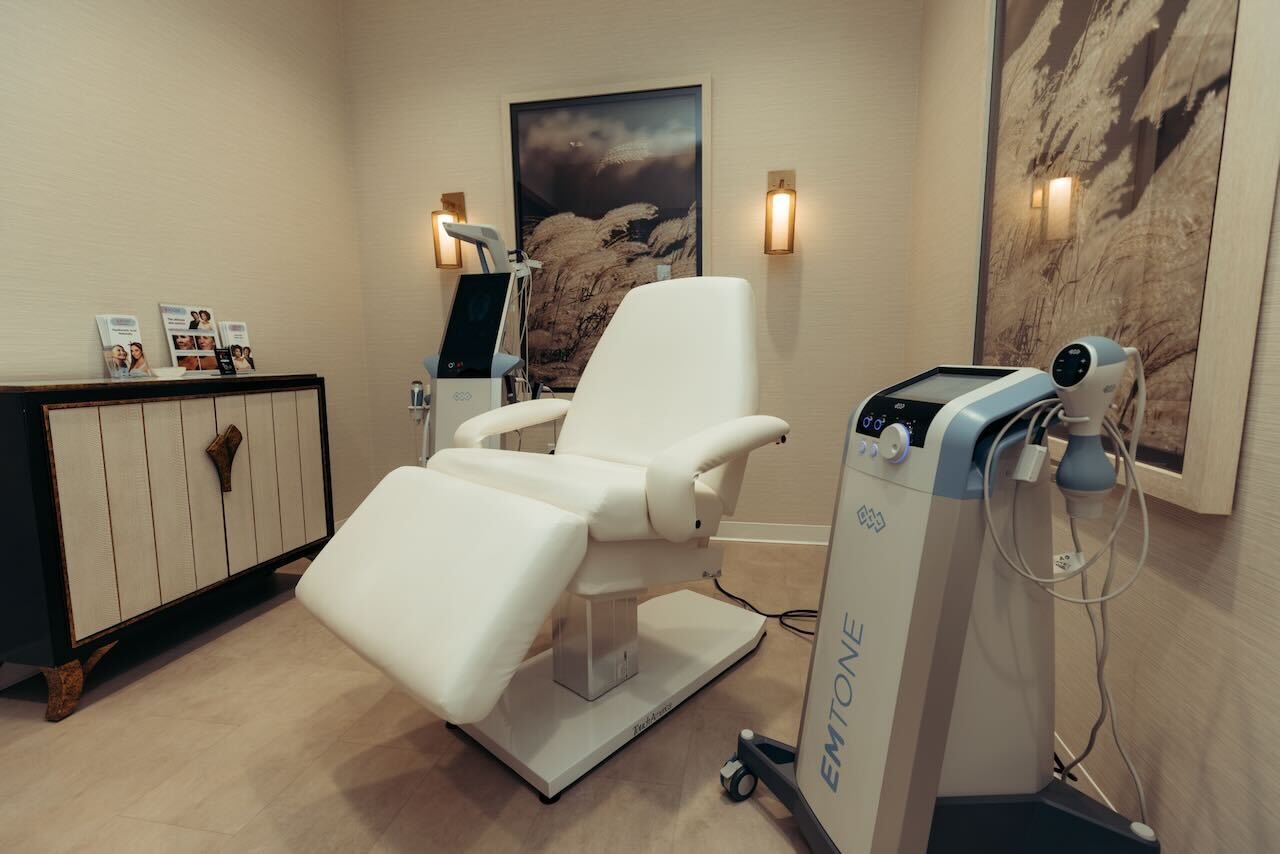
Thrive Medicine Clinic offers EMTONE in Houston Heights for clients interested in a noninvasive approach to cellulite and uneven skin texture.
EMTONE vs Avéli at a Glance
| Feature | EMTONE | Avéli |
|---|---|---|
| Procedure type | Noninvasive | Minimally invasive |
| Main approach | RF + targeted pressure energy | Targeted release of fibrous septa |
| Incision | No | Small access incision |
| Device goes under skin | No | Yes |
| Local anesthesia | Not normally required | Used for the procedure |
| Typical plan | Series of sessions | Usually one procedure |
| Cellulite focus | Diffuse dimpling, texture and overall appearance | Individual cellulite dimples caused by septa |
| Mild skin laxity | May improve appearance | Not designed to treat laxity |
| Fat reduction | Not primary purpose | Does not treat fat |
| Common areas | Multiple body areas depending on candidacy | Buttocks and thighs |
| Current Avéli indication | Not applicable | Adult females, buttocks and thighs, long-term reduction supported through 1 year |
BTL describes EMTONE as combining thermal and mechanical energy for cellulite-related concerns. Published studies have evaluated four-session protocols using radiofrequency and targeted pressure energy.
Avéli’s current manufacturer information describes a single minimally invasive procedure that identifies and releases cellulite-causing septa beneath dimples. Its current indication is for long-term reduction in cellulite appearance on the buttocks and thighs of adult females, supported by clinical data through one year.
They Treat Cellulite in Different Ways
Cellulite is not one simple tissue problem.
The dimpled appearance can involve:
That is why different cellulite procedures can target different parts of the problem.
EMTONE
Works externally using energy delivered across a larger treatment area.
The goal is improvement in overall cellulite appearance, texture, and mild laxity.
Avéli
Works beneath the skin.
The provider identifies specific septa contributing to visible dimples and mechanically releases them.
This makes the comparison more useful than asking which technology is “stronger.”
They do not work the same way.
What Does EMTONE Do?
EMTONE combines:
Monopolar radiofrequency
and
Targeted pressure energy
during the same session.
Radiofrequency creates controlled tissue heating.
Targeted pressure energy provides mechanical stimulation to the tissue.
Published research using this combination has documented improvement in cellulite severity and skin appearance following a series of sessions.
The treatment is performed externally.
There are:
EMTONE may be particularly relevant when cellulite appears as broader:
rather than only a handful of isolated deep dimples.
What Does Avéli Do?
Avéli takes a different approach.
The device is inserted into the tissue beneath the skin through a small access point.
The provider uses it to identify fibrous septa beneath individual cellulite depressions and then mechanically releases those bands.
The FDA’s device summary describes the process as controlled mechanical cutting of fibrous tissue that contributes to cellulite appearance.
The manufacturer describes the process as:
This is why Avéli is often discussed as a focal cellulite-dimple procedure rather than a general surface-smoothing technology.
What Kind of Cellulite Are You Seeing?
This distinction may help determine which conversation is more relevant.
Individual Tethered Dimples
You may see:
Avéli is specifically designed to identify and release septa associated with these cellulite depressions.
More Diffuse Cellulite Texture
You may see:
EMTONE treats the surface area noninvasively using RF and targeted pressure energy.
These patterns can overlap.
A person may have both individual tethered dimples and more general skin-texture changes.
EMTONE vs Avéli for Loose or Less-Firm Skin
This is an important difference.
Avéli’s own current materials specifically state:
Avéli treats cellulite dimples.
Avéli does not treat laxity.
Avéli does not treat fat.
EMTONE, on the other hand, has published research reporting improvement in mild skin laxity alongside cellulite improvement.
That may make EMTONE more relevant when the concern involves:
This does not mean EMTONE can correct significant loose skin.
Substantial redundant skin is a different concern and may require another approach.

What About Distinct, Deep Cellulite Depressions?
Avéli is specifically designed around this problem.
Its mechanism directly targets the fibrous septa underneath individual cellulite dimples.
The pivotal Avéli study evaluated a single targeted septa-release procedure for moderate to severe cellulite on the buttocks and thighs.
Independent evaluators documented significant improvement that remained present through 12 months.
EMTONE works differently.
It does not make a small incision or mechanically cut individual septa.
A person with a small number of pronounced tethered dimples may therefore have a different treatment discussion from someone with diffuse cellulite and mild laxity across a broader area.
EMTONE Does Not Enter the Skin
EMTONE is noninvasive.
The handpiece remains outside the body while RF and targeted pressure energy are delivered through the skin.
Avéli is minimally invasive.
The device is advanced into the subcutaneous tissue through a small incision to locate and release fibrous septa.
This distinction can matter if you strongly prefer:
Someone who is comfortable with a minimally invasive procedure may weigh those factors differently.
EMTONE Series vs One Avéli Procedure
The treatment schedule is another major difference.
EMTONE
Published EMTONE studies commonly use four sessions.
One study treated participants four times over two to four weeks, with follow-up extending through six months.
Avéli
Avéli is designed as a single in-office procedure.
The pivotal clinical study evaluated one Avéli procedure rather than a treatment series.
So the practical tradeoff is different.
EMTONE involves multiple noninvasive visits.
Avéli typically involves one minimally invasive procedure followed by healing and follow-up.
EMTONE vs Avéli Recovery
After EMTONE
There is generally no planned recovery period.
Clients can typically resume normal activities after treatment.
Temporary redness, tenderness, warmth, or other skin reactions may occur.
Radiofrequency procedures also carry risks such as burns, blistering, pigmentation changes, nodules, or scarring when complications occur.
After Avéli
Recovery reflects the fact that Avéli enters and mechanically releases tissue beneath the skin.
The manufacturer reports that common side effects include:
These typically resolved within 30 days in the clinical data.
Some study participants returned to normal activity within one day, while most returned within one week.
The original FDA clinical summary also reported bruising in most participants, tenderness or pain in many participants during the first 24 hours, and several device-related events including an extended incision, skin laceration, and a small scar.
This does not make Avéli an unsafe procedure.
It means the recovery experience is meaningfully different from a noninvasive EMTONE session.
How Do EMTONE and Avéli Results Differ?
The studies should not be compared as though they were a head-to-head clinical trial.
They were not.
EMTONE Evidence
A 2023 EMTONE study involving 30 participants used four sessions.
Twenty-eight completed follow-up.
Researchers reported significant improvement in cellulite severity and aesthetic appearance, with improvements measurable through six months.
An earlier 30-person study using simultaneous RF and targeted pressure energy also reported improvement after a four-session series.
Avéli Evidence
The Avéli pivotal study evaluated a single procedure.
At 12 months, blinded evaluators found sustained improvement in Cellulite Severity Scale scores compared with baseline.
Avéli’s current indication reflects clinical evidence supporting long-term cellulite reduction through one year of observation.
These numbers should not be placed side by side as proof that one procedure is more effective.
The studies:
There is no direct EMTONE-versus-Avéli clinical trial establishing a universal winner.
Does Avéli Last Longer Than EMTONE?
The evidence allows us to say something more precise.
Avéli has clinical data supporting treatment benefits through one year, and its current indication describes long-term reduction of cellulite appearance on the thighs and buttocks in adult females.
The primary EMTONE-specific study followed participants through six months and found measurable improvement still present at that time.
That does not mean:
Avéli lasts exactly one year.
It also does not mean:
EMTONE stops working after six months.
Those dates are the follow-up periods supported by the cited studies.
Study follow-up should not be confused with an expiration date.
EMTONE Has a Broader Body-Area Discussion
Avéli’s current cellulite indication specifically covers:
in adult females.
Published EMTONE research has evaluated:
That makes EMTONE potentially relevant to a broader set of body areas.
The treated area should still be based on Thrive’s actual EMTONE protocol and device instructions.
Neither Should Be Chosen Primarily for Weight Loss
Cellulite and body fat are related but not interchangeable.
Avéli’s manufacturer explicitly states that Avéli does not treat fat.
EMTONE should also not be chosen primarily as a fat-reduction technology.
The FDA distinguishes cellulite improvement from fat reduction and from muscle-toning procedures.
If localized fat is the main concern, another body-contouring technology may make more sense.
At Thrive, that distinction also creates a natural conversation around EMSCULPT NEO when muscle and localized fat are the actual goals.
Not Sure What Kind of Cellulite You Have?
You do not need to decide between procedure names before your consultation.
Start with what you actually see:
Thrive Medicine Clinic can evaluate the area and discuss whether EMTONE matches the type of improvement you want.
When Might EMTONE Be the More Relevant Conversation?
EMTONE may be worth considering if you:
This is not a guarantee that EMTONE will be the right choice.
It simply describes situations where its characteristics may better match the goal.
When Might a Septa-Release Procedure Be Worth Discussing?
A minimally invasive cellulite procedure may be worth researching if:
Avéli is indicated for adult females.
Someone who does not fit its indication or whose primary concern is skin laxity, fat, or another body area requires a different discussion.
What if You Have Both Deep Dimples and Diffuse Texture?
Conceptually, these technologies address different parts of cellulite appearance.
Avéli targets individual septa beneath visible dimples.
EMTONE addresses cellulite appearance more broadly through RF and mechanical energy and may also improve mild laxity.
However, that does not mean the two should automatically be combined.
There is not strong published evidence establishing a standard EMTONE-plus-Avéli combination protocol.
If someone has undergone a minimally invasive cellulite procedure elsewhere, Thrive should review:
before considering additional energy-based therapy.
Cellulite Improvement Is More Than Dimple Count
Someone may have fewer deep dimples but still be bothered by:
That is where the difference between dimple release and surface/tissue improvement becomes particularly important.
Avéli’s manufacturer explicitly distinguishes cellulite-dimple treatment from laxity and fat.
EMTONE research has evaluated cellulite appearance together with mild skin-laxity improvement.
This means two people with “cellulite” may have different priorities even if the concern sounds identical.
Why Cost Alone Does Not Tell You Which Procedure Makes Sense
The financial structure of the procedures is different.
EMTONE generally involves a series of appointments.
Avéli is generally performed as one minimally invasive procedure.
Comparing the price of:
one EMTONE session
with
one complete Avéli procedure
would therefore not be meaningful.
A useful comparison should look at:
Thrive should publish actual EMTONE pricing only if the clinic is comfortable providing meaningful pricing information.
Do not publish speculative Avéli pricing for other offices.
A Simple Decision Framework
Your Main Concern Is Broad Cellulite Texture
EMTONE may be worth discussing.
Your Main Concern Is Mild Skin Laxity Plus Cellulite
EMTONE may be particularly relevant because Avéli is not intended to treat laxity.
Your Main Concern Is a Small Number of Distinct Deep Dimples
A septa-release procedure such as Avéli represents a different approach worth understanding.
You Do Not Want an Incision
EMTONE is noninvasive.
You Prefer One Procedure Over a Series
Avéli is designed around a single procedure.
Your Cellulite Is on the Abdomen or Arms
Avéli’s cellulite indication is for the buttocks and thighs. EMTONE research has included additional body areas.
Your Main Concern Is Fat or Muscle
Neither comparison should be the starting point. Thrive may instead discuss another body-contouring technology based on the goal.
Evaluating Cellulite Options in Houston Heights
Houston has multiple cellulite technologies available.
That can make the decision confusing because every procedure is marketed as a solution for the same word:
cellulite.
But cellulite can look very different from person to person.
At Thrive Medicine Clinic in Houston Heights, the EMTONE conversation should begin with:
That makes it easier to determine whether EMTONE’s mechanism actually fits what you are trying to change.
Location:
Thrive Medicine Clinic
802 W 18th St
Houston, TX 77008
Frequently Asked Questions About EMTONE vs Avéli
What is the biggest difference between EMTONE and Avéli?
EMTONE is noninvasive and uses radiofrequency plus targeted pressure energy across the treatment area. Avéli is minimally invasive and mechanically releases specific fibrous septa beneath cellulite dimples.
Does Avéli use radiofrequency?
No. Avéli mechanically identifies and releases fibrous septa beneath cellulite depressions. EMTONE uses RF and targeted pressure energy.
Does EMTONE cut cellulite bands?
No. EMTONE does not make an incision or mechanically cut individual septa.
Is Avéli FDA cleared?
Yes. FDA records classify Avéli as a Class II powered surgical instrument for improvement in cellulite appearance. Its current indication supports long-term reduction in cellulite appearance on the buttocks and thighs of adult females through one year of observation.
Is EMTONE noninvasive?
Yes. EMTONE is performed externally without an incision or instrument being inserted beneath the skin.
Does Avéli require an incision?
Yes. The FDA device description states that the distal end is advanced into the subcutaneous tissue through a small incision.
Does Avéli require anesthesia?
The manufacturer describes Avéli as a minimally invasive procedure performed using local anesthesia.
Which is better for mild skin laxity?
EMTONE may be more relevant when cellulite occurs with mild laxity. Avéli’s manufacturer specifically states that Avéli does not treat laxity.
Which is better for deep cellulite dimples?
Avéli specifically targets fibrous septa responsible for individual cellulite depressions. EMTONE treats cellulite appearance using an external energy-based approach.
Which is better for diffuse cellulite?
EMTONE may be worth discussing when broader rippling, uneven texture, and mild laxity are part of the concern. Candidacy still needs to be evaluated individually.
How many EMTONE sessions are typical?
Published EMTONE studies commonly use four sessions, and BTL commonly recommends a four-session initial series.
How many Avéli procedures are typical?
Avéli is designed as a single in-office procedure. The pivotal clinical study evaluated one treatment.
How long do Avéli results last?
The current indication is supported by clinical data demonstrating treatment benefits through one year of observation. That does not establish a universal expiration date.
How long do EMTONE results last?
The main EMTONE study documented measurable improvement through six months. Six months was the study follow-up point, not a guaranteed expiration date.
Does Avéli treat fat?
No. The manufacturer specifically states that Avéli does not treat fat.
Does EMTONE reduce fat?
Fat reduction should not be the primary reason to choose EMTONE. Its main role is improvement in cellulite appearance and related texture concerns.
Is there downtime with EMTONE?
EMTONE is generally described as having no planned downtime, although temporary skin reactions can occur.
Is there downtime with Avéli?
Bruising, tenderness, and short-term pain are common. Manufacturer information states that some study participants returned to normal activities within one day and most within a week.
Can men have Avéli?
The current cellulite indication is specifically for adult females with cellulite on the thighs and buttocks.
Can EMTONE be used on areas other than the thighs and buttocks?
Published EMTONE research has included the thighs, hips, buttocks, abdomen, and arms. Thrive should confirm which areas it actually treats.
Is EMTONE better than Avéli?
There is no direct head-to-head clinical trial establishing one as universally better. They use different mechanisms and may suit different cellulite patterns and preferences.
Start With the Type of Cellulite You Want to Change
EMTONE and Avéli both address cellulite, but they take fundamentally different approaches.
EMTONE is noninvasive and treats the area externally using radiofrequency and targeted pressure energy.
Avéli is minimally invasive and targets individual fibrous septa beneath cellulite dimples.
If you prefer a noninvasive approach or your concern includes broader texture and mild laxity, EMTONE may be worth discussing.
Thrive Medicine Clinic can evaluate the area and help determine whether EMTONE fits your goals.
Thrive Medicine Clinic
802 W 18th St
Houston, TX 77008