
EMFACE, Botox, and dermal fillers can all come up in conversations about facial rejuvenation, but they do very different things.
EMFACE uses synchronized radiofrequency and HIFES® facial muscle stimulation without injections. Botox and other cosmetic neuromodulators temporarily reduce activity in selected facial muscles. Dermal fillers add material beneath the skin to restore or create volume and contour.
The right option depends less on which procedure is newest and more on what is actually creating the facial change you want to address.
Thrive Medicine Clinic offers EMFACE in Houston Heights and can help you understand how these options differ before you decide what fits your goals.
EMFACE vs Botox vs Fillers at a Glance
EMFACE works without injections. It combines synchronized radiofrequency with HIFES facial muscle stimulation to address the skin and selected facial muscles.
Botox and similar neuromodulators are injectable medications that temporarily reduce activity in selected muscles. They are commonly used when muscle movement contributes to expression lines.
Dermal fillers are injectable materials placed beneath or within tissue to restore or add volume, smooth certain folds, or enhance areas such as the cheeks, lips, chin, or jawline.
They are not three versions of the same procedure.
Someone primarily concerned about facial muscle support may have a different conversation from someone bothered by dynamic expression lines or true facial volume loss.
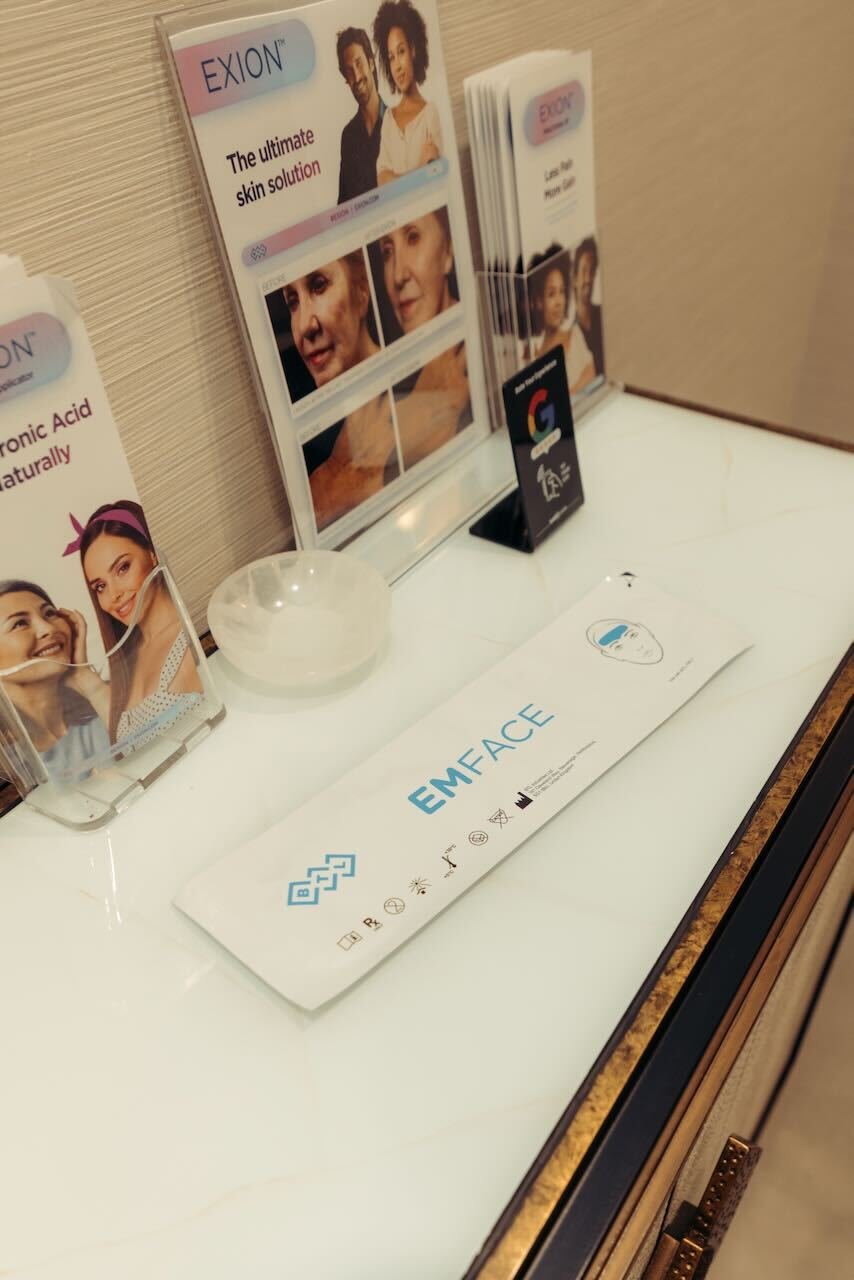
EMFACE vs Botox vs Dermal Fillers
| Feature | EMFACE | Botox / Neuromodulators | Dermal Fillers |
|---|---|---|---|
| Uses injections | No | Yes | Yes |
| Primary mechanism | RF + facial muscle stimulation | Temporarily reduces selected muscle activity | Adds material and volume |
| Facial muscles | Stimulates selected muscles | Reduces activity in selected muscles | Does not primarily target muscle activity |
| Adds facial volume | No | No | Yes |
| Skin component | Synchronized RF | Not the primary mechanism | Depends on product and placement |
| Dynamic expression lines | Different approach | Common reason for use | Not the primary mechanism |
| Volume loss | Does not directly replace lost volume | Does not replace volume | Common reason for use |
| Needles | No | Yes | Yes |
| Best choice | Depends on facial concern | Depends on facial concern | Depends on facial concern |
The useful question is not:
“Which one is best?”
It is:
“What is causing the change I want to improve?”
How Does EMFACE Work?
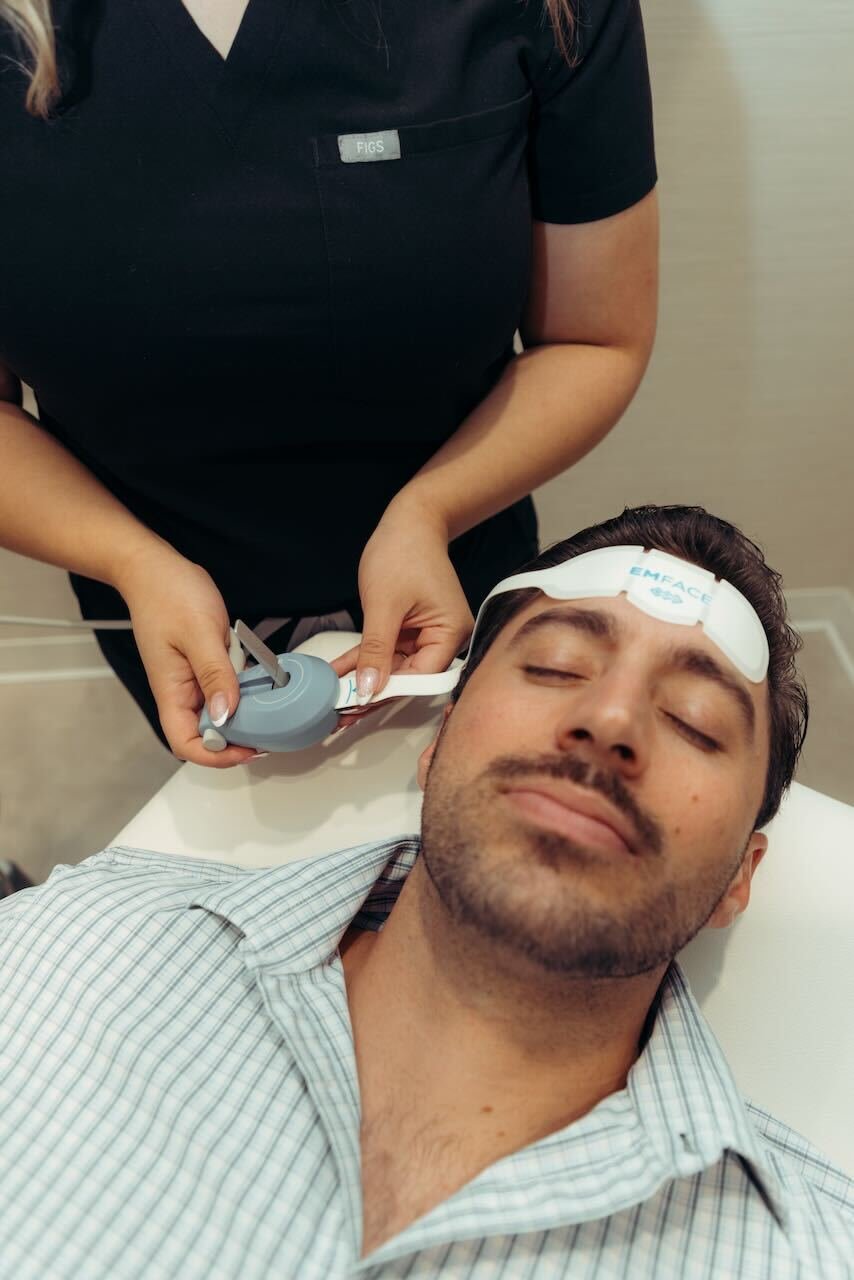
EMFACE combines two technologies during the same noninvasive session.
Synchronized Radiofrequency
Radiofrequency delivers controlled heat to facial tissue. BTL describes this component as supporting collagen- and elastin-related changes within the skin.
HIFES Facial Muscle Stimulation
HIFES produces repeated contractions in selected facial muscles.
That muscle component is one of the biggest differences between EMFACE and many other facial aesthetic procedures.
EMFACE does not inject a drug into the muscle and does not place filler into facial tissue.
It uses energy and muscle stimulation while the applicators remain on the surface of the face.
EMFACE is FDA-cleared for noninvasive temporary reduction of facial wrinkles and applies muscle stimulation resulting in an induced muscle workout.
How Is Botox Different From EMFACE?
Botox Cosmetic belongs to a category of medications called botulinum toxin products or neuromodulators.
These injectable medications work by reducing nerve signaling to selected muscles, which temporarily reduces muscle movement.
This can make certain wrinkles caused or accentuated by repeated facial expression appear less noticeable.
Common examples include lines involving areas such as the forehead, between the eyebrows, and around the eyes, depending on the specific product and approved indication.
EMFACE works differently.
Rather than reducing selected facial muscle activity, EMFACE uses HIFES to stimulate selected facial muscles while synchronized RF is delivered to facial tissue.
So the technologies are not interchangeable.
One reduces selected muscle activity.
The other stimulates selected facial muscles as part of a broader energy-based procedure.
How Are Dermal Fillers Different From EMFACE?
Dermal fillers solve a different problem.
FDA-approved fillers can be used for specific purposes such as correcting certain facial wrinkles and folds or adding fullness to areas including the cheeks, lips, chin, and other approved locations.
The filler material physically adds volume or structural support to the area where it is placed.
EMFACE does not add injectable volume.
That distinction becomes important if the concern is true facial volume loss.
Someone who has lost meaningful cheek volume, for example, is asking a different question from someone interested in facial muscle stimulation or a needle-free facial procedure.
EMFACE should not be marketed as filler without needles.
It does not create volume through the same mechanism.
Which Option Makes Sense for What I See in the Mirror?
The most useful way to compare these treatments is to start with the concern.
Expression Lines
If a wrinkle becomes particularly noticeable when you frown, squint, smile, or raise your eyebrows, muscle activity may be contributing to its appearance. Botox-type neuromodulators are specifically designed to temporarily reduce activity in selected muscles. EMFACE approaches facial muscles differently by stimulating them rather than blocking their activity.
Facial Volume Loss
If the concern is hollowing, flattening, or a loss of volume in a particular area, filler may be part of that conversation. EMFACE does not directly replace lost volume.
Facial Muscle Support
If you are interested in stimulating selected facial muscles as part of a needle-free rejuvenation approach, EMFACE has a distinct mechanism that Botox and fillers do not provide.
Skin and Wrinkles
Skin quality can also contribute to facial lines and aging. EMFACE includes synchronized RF in addition to muscle stimulation and is FDA-cleared for temporary reduction of facial wrinkles. More than one factor may contribute to the same appearance, which is why an individual evaluation can be more useful than selecting a procedure based only on an online before-and-after photograph.
Does EMFACE Replace Botox?
Not necessarily.
EMFACE and Botox work in almost opposite ways at the muscular level.
Botox-type neuromodulators temporarily reduce activity in selected muscles.
EMFACE uses HIFES to create repeated contractions in selected facial muscles.
Someone primarily bothered by a dynamic expression line may have different needs from someone interested in facial muscle stimulation and broader noninvasive facial rejuvenation.
That is why EMFACE should not be advertised as “Botox without needles.”
It is a different technology with a different mechanism.
Does EMFACE Replace Dermal Filler?
Not when actual volume replacement is the goal.
Dermal fillers physically add material to selected areas.
EMFACE does not.
If facial hollowing or loss of structural volume is a major part of the concern, a provider may determine that an approach specifically designed for volume makes more sense.
If the concern is more related to facial muscle support, wrinkles, or a preference for needle-free rejuvenation, EMFACE may be worth discussing.
The correct choice depends on the anatomy and the goal.
Which Option Looks More Natural?
“Natural-looking” is not determined simply by whether a procedure uses a device or an injection.
Good results depend on:
the treatment selected, how much treatment is used, the provider’s approach, facial anatomy, and the client’s goals.
EMFACE does not inject volume into the face, which may appeal to people who do not want additional filler.
That does not make filler inherently unnatural.
Likewise, Botox does not automatically produce a frozen appearance when appropriately selected and administered.
The goal should be choosing the least complicated approach that addresses the actual concern while respecting the person’s existing facial features.
Which Options Require Needles?
EMFACE does not use needles for the standard facial procedure.
The applicators sit on the surface of the face and deliver synchronized RF and HIFES muscle stimulation.
Botox and similar neuromodulators require injections.
Dermal fillers also require injection using a needle or cannula.
For someone who strongly prefers to avoid injections, that difference can make EMFACE particularly interesting.
But avoiding needles should not be the only factor in choosing a procedure.
The procedure still needs to fit the concern.
EMFACE vs Botox and Fillers: What About Downtime?
Standard EMFACE is noninvasive and typically does not require a planned recovery period.
BTL states that normal activities can generally resume after treatment.
Botox injections may produce temporary redness, swelling, tenderness, or bruising at injection sites.
Dermal fillers can also cause temporary swelling, redness, tenderness, or bruising. The FDA notes that filler side effects commonly occur shortly after injection, although less common and more serious complications can also occur.
Recovery should therefore be considered separately for each procedure rather than assuming that all “non-surgical” facial procedures have the same experience.
Are EMFACE, Botox, and Fillers Risk-Free?
No medical or aesthetic procedure should be described as risk-free.
EMFACE does not involve an injection, but BTL lists possible temporary skin effects and device-specific contraindications.
Botulinum toxin products are prescription medications with their own warnings and potential side effects.
Dermal filler is also a medical procedure. The FDA notes that the most serious filler risk is unintended injection into a blood vessel, which in rare cases can cause tissue death, vision abnormalities including blindness, or stroke.
These risks do not mean that someone should automatically avoid treatment.
They do mean the procedure, product, anatomy, provider experience, and individual health history matter.
Discuss the expected benefits, limitations, risks, and alternatives before choosing an aesthetic procedure.
Can You Have EMFACE With Botox or Filler?
These procedures work through different mechanisms, so choosing EMFACE does not automatically mean a person can never use Botox or filler.
However, whether treatments should be combined and how they should be timed should be determined individually.
Factors can include:
where injections were placed, when they were performed, the EMFACE treatment area, facial anatomy, treatment goals, and the specific products involved.
Thrive Medicine Clinic should provide sequencing recommendations based on the procedures you have actually received.
Not Sure Which Approach Fits Your Concern?
You do not need to decide between EMFACE, Botox, and filler before your consultation.
Start with what you see and what you would like to change.
Thrive Medicine Clinic can help you understand whether your concern is more closely related to muscle activity, facial volume, skin quality, facial muscle support, or a combination of factors.
What If I Don’t Want Botox or Filler?
Some people researching EMFACE are not opposed to injectables.
Others specifically want to explore facial rejuvenation without them.
EMFACE can be appealing in that situation because the standard facial procedure does not use needles or injected products.
But choosing to avoid injections should still come with realistic expectations.
EMFACE does not duplicate every effect of Botox.
It does not physically replace lost volume like filler.
And it does not produce the same structural changes as facial surgery.
Its value is that it offers a different mechanism: synchronized radiofrequency combined with facial muscle stimulation.
Do EMFACE, Botox, and Filler Produce Results at the Same Speed?
No.
They work differently, so results should not be expected to develop in the same way.
EMFACE results can develop during and after a treatment series as the tissues respond to RF and muscle stimulation.
Botulinum toxin effects develop after injection as the medication affects selected muscle activity.
Dermal filler can create visible volume changes soon after placement, although swelling can temporarily affect how the area looks immediately after treatment.
When comparing before-and-after photographs, it is important to understand when the photograph was taken and what procedure was actually performed.
EMFACE, Botox, or Fillers: How Do I Choose?
A simple way to begin is to ask what you are trying to change.
If your primary concern is repetitive muscle movement and expression lines:
A neuromodulator may be worth discussing.
If your primary concern is lost volume or a specific contour that requires additional volume:
Dermal filler may be worth discussing.
If your primary interest is a needle-free procedure that combines facial muscle stimulation with synchronized RF:
EMFACE may be worth discussing.
Real faces are more complicated than those three categories.
A person may have changes involving skin, muscle movement, volume, facial support, and anatomy at the same time.
That is why the consultation should begin with your face and your goals, not with a predetermined product.
What if My Main Concern Is Skin Texture or Acne Scars?
EMFACE may not be the most relevant Thrive technology for every facial concern.
If acne scars, enlarged-looking pores, or uneven skin texture are the main issue, EXION Fractional RF may be more directly relevant because it uses RF microneedling.
EMFACE does not use microneedles and is distinguished by its HIFES facial muscle stimulation.
Comparing Facial Rejuvenation Options in Houston Heights
Thrive Medicine Clinic offers EMFACE as part of its broader aesthetic and wellness services in Houston Heights.
The benefit of having more than one option is not simply having more procedures to sell.
It allows the conversation to begin with what the client actually wants to address.
You may be concerned about expression lines.
You may notice a loss of facial volume.
You may want to avoid injections.
Or you may be interested in the combination of skin-focused RF and facial muscle stimulation that makes EMFACE different.
Understanding the cause of the concern makes it easier to discuss an appropriate option.
Location:
Thrive Medicine Clinic
802 W 18th St
Houston, TX 77008
Your BTL Facial Technology Consultation at Thrive
ADD ONCE PROVIDER RESPONSIBILITIES ARE CONFIRMED.
Include:
Do not simply write:
“Performed by our highly trained experts.”
Identify the actual person responsible for evaluating or providing the procedure.
Thrive’s website identifies Dr. Rhet Langley and Dr. Phillip Gallegos as the clinic’s board-certified physician leadership, but the page should not state that either physician personally performs or supervises EXION or EMFACE unless Thrive confirms that role.

Frequently Asked Questions About EMFACE vs Botox & Fillers
Is EMFACE the same as Botox?
No. Botox and other botulinum toxin products temporarily reduce activity in selected muscles. EMFACE uses synchronized RF and HIFES to stimulate selected facial muscles.
Is EMFACE a filler?
No. EMFACE does not inject material into facial tissue and does not physically add volume.
Is EMFACE better than Botox?
They address facial concerns through different mechanisms, so there is no universal better option. The appropriate choice depends on what is causing the appearance you want to change.
Is EMFACE better than filler?
Not when true volume replacement is the goal. Fillers physically add volume, while EMFACE does not.
Can EMFACE replace Botox?
Not necessarily. Someone who wants to reduce movement associated with specific expression lines may have different goals from someone interested in facial muscle stimulation.
Can EMFACE replace filler?
EMFACE does not replace lost facial volume in the same way that dermal filler does.
Does EMFACE use needles?
No. Standard EMFACE uses external applicators and does not require injections.
Which is better for wrinkles?
It depends on the type and cause of the wrinkle. EMFACE is FDA-cleared for temporary reduction of facial wrinkles. Botox-type neuromodulators are used for certain facial lines influenced by muscle movement, while fillers can address certain wrinkles, folds, or volume deficiencies.
Does EMFACE add facial volume?
EMFACE does not inject or place filler into the face. Changes in facial appearance occur through a different mechanism involving synchronized RF and facial muscle stimulation.
Can I have EMFACE if I already have Botox or filler?
Possibly, but treatment timing and suitability should be reviewed individually. Tell Thrive when and where you received previous injections and what products were used.
Does EMFACE have less downtime?
EMFACE is noninvasive and typically does not require planned downtime. Injectables can produce temporary swelling, redness, tenderness, or bruising. Individual experiences vary.
Is filler dangerous?
Dermal fillers have established medical uses but also carry potential risks. The FDA identifies accidental injection into a blood vessel as the most serious risk because it can result in tissue injury and, rarely, vision loss or stroke. Filler should be administered by an appropriately trained licensed health care provider.
Which option looks the most natural?
Natural-looking results depend on appropriate treatment selection, anatomy, product or device use, and provider technique. No single category automatically produces a more natural result.
How do I know whether I need EMFACE, Botox, or filler?
Start with what you want to improve rather than choosing the procedure yourself. A provider can evaluate whether the concern primarily involves muscle movement, facial volume, skin, facial muscle support, or a combination.
Understand Your Facial Rejuvenation Options
EMFACE, Botox, and dermal fillers are not interchangeable procedures.
If you are considering facial rejuvenation in Houston Heights, understanding what is contributing to the change you see is the best place to start.
Thrive Medicine Clinic can discuss your goals, explain the differences between available options, and help determine whether EMFACE is appropriate for you.
Location:
802 W 18th St
Houston, TX 77008
Contact Us
Our Services
Services Areas
Quick Links
Not Sure Which Approach Fits Your Concern?
You do not need to decide between EMFACE, Botox, and filler before your consultation.
Start with what you see and what you would like to change.
Thrive Medicine Clinic can help you understand whether your concern is more closely related to muscle activity, facial volume, skin quality, facial muscle support, or a combination of factors.