
Do Kegels.
See a pelvic-floor physical therapist.
Try EMSELLA.
These approaches all involve the pelvic floor, but they are not interchangeable.
Kegel exercises teach you to voluntarily contract and relax your pelvic-floor muscles. Pelvic-floor physical therapy can evaluate strength, coordination, relaxation, movement, pain, bladder habits, and other contributors to pelvic-floor symptoms. EMSELLA uses electromagnetic stimulation to create repeated pelvic-floor muscle contractions while you remain seated and fully clothed.
At Thrive Medicine Clinic in Houston Heights, the useful question is not simply which option is “best.”
It is which approach makes sense for what is actually causing your symptoms.
EMSELLA vs Kegels vs Pelvic-Floor PT at a Glance
Kegel exercises are voluntary pelvic-floor contractions that can strengthen the muscles when performed correctly and consistently.
Pelvic-floor physical therapy is a broader form of rehabilitation. A pelvic-health physical therapist can assess whether the pelvic floor is weak, poorly coordinated, overly tight, painful, or difficult to relax and can create an individualized rehabilitation plan.
EMSELLA uses HIFEM® electromagnetic energy to stimulate repeated pelvic-floor contractions without requiring you to voluntarily perform each contraction.
They do not necessarily compete with one another.
For some people, one approach may be enough. For others, combining pelvic-floor training with electromagnetic stimulation may make sense.
Recent 2026 research suggests combined approaches may provide additional benefit in selected people with urinary incontinence.
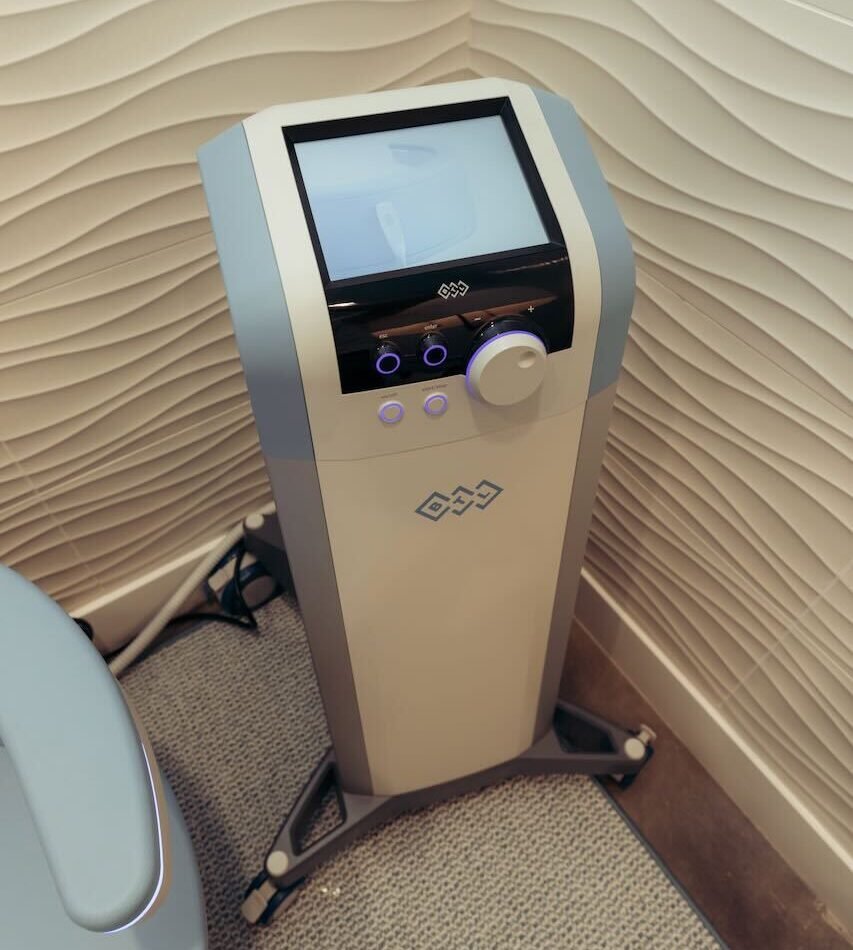
EMSELLA vs Kegel Exercises vs Pelvic-Floor Physical Therapy
| Feature | EMSELLA | Kegel Exercises | Pelvic-Floor Physical Therapy |
|---|---|---|---|
| Pelvic-floor contractions | Stimulated automatically | Performed voluntarily | May include voluntary contractions |
| Requires daily exercises | Not during the session | Usually yes | Often includes home exercises |
| Assesses pelvic-floor function | No | No | Yes |
| Can evaluate tight vs weak muscles | No | No | Yes |
| Can address coordination | Limited | Limited | Yes |
| Can address pelvic pain | Not its primary purpose | May worsen some tight-floor conditions | Often part of evaluation and care |
| Internal examination required | No | No | Sometimes, with consent and when clinically appropriate |
| Clothing stays on | Yes | Yes | Depends on assessment/therapy |
| Primary role | Electromagnetic muscle stimulation | Voluntary strengthening/control | Individualized pelvic rehabilitation |
The right starting point depends on the symptoms and whether pelvic-floor weakness is actually the problem.
How Do Kegel Exercises Work?
Kegels involve intentionally contracting and relaxing the muscles that help control urination.
When performed correctly, pelvic-floor muscle exercises can improve strength and bladder control.
NIDDK notes that both women and men can benefit from pelvic-floor muscle exercises for urinary leakage.
The challenge is that Kegels only work as intended when the correct muscles are being used.
Some people:
NIDDK specifically notes that many people have difficulty identifying the correct muscles and that a doctor, nurse, or pelvic-floor therapist can help verify proper technique.
So “just do Kegels” is not always as simple as it sounds.
What Does a Pelvic-Floor Physical Therapist Do?
Pelvic-floor physical therapy is much broader than teaching Kegels.
Depending on your symptoms, an evaluation may consider:
A pelvic-floor therapist may use strengthening when weakness is present.
But therapy may also emphasize relaxation, coordination, breathing, mobility, bladder training, or other strategies.
That makes physical therapy particularly useful when it is unclear whether the pelvic floor is simply weak.
For women with stress or mixed urinary incontinence, NICE recommends a supervised pelvic-floor muscle training program of at least three months as first-line management.
How Is EMSELLA Different?
EMSELLA uses HIFEM electromagnetic technology to stimulate the pelvic-floor musculature.
You remain fully clothed and seated on the device while the electromagnetic field produces repeated pelvic-floor contractions.
BTL describes EMSELLA as intended for rehabilitation of weak pelvic muscles and restoration of neuromuscular control in male and female urinary incontinence.
The main practical difference is that you do not have to voluntarily create each contraction.
This can make EMSELLA interesting for someone who:
But EMSELLA does not perform a pelvic-floor examination and cannot independently tell whether your pelvic floor is weak, tight, painful, or poorly coordinated.
Is EMSELLA Better Than Kegels?
The current evidence does not support reducing the choice to “EMSELLA or Kegels.”
They train the pelvic floor in different ways.
Kegels require you to voluntarily identify, contract, hold, and relax the pelvic-floor muscles.
EMSELLA stimulates contractions externally.
A 2026 study followed 99 postmenopausal women with urinary incontinence. One group received EMSELLA alone, while the other received EMSELLA plus a structured Kegel program.
Both groups improved, but the combined group had greater improvement in urinary-incontinence symptom scores.
That suggests voluntary pelvic-floor training may still provide value even when EMSELLA is being used.
EMSELLA should therefore not be marketed as a reason to stop using your pelvic floor voluntarily.

Can EMSELLA Replace Pelvic-Floor Physical Therapy?
Not completely.
The biggest difference is assessment.
EMSELLA stimulates muscle contractions.
A pelvic-floor physical therapist can evaluate why the symptoms may be occurring.
That distinction matters when a person has:
Pelvic-floor PT can also teach someone how to use the muscles during coughing, lifting, exercise, and everyday movement.
EMSELLA does not provide that type of movement or behavioral coaching.
For straightforward weakness-related leakage, electromagnetic stimulation may be an option worth discussing.
For complex pelvic-floor symptoms, evaluation may be particularly important.
Can EMSELLA and Pelvic-Floor Exercises Work Together?
Yes, and recent evidence makes this one of the most interesting areas of EMSELLA research.
A 2026 randomized controlled trial included 44 women with stress urinary incontinence.
Both groups completed supervised pelvic-floor muscle training.
One group also received high-intensity focused electromagnetic therapy.
Both improved, but the group receiving electromagnetic stimulation in addition to supervised training had greater improvement in pelvic-floor muscle measurements, urinary symptoms, and quality-of-life scores.
A separate 2026 study of 99 postmenopausal women similarly found greater improvement when structured Kegel exercises were combined with EMSELLA compared with EMSELLA alone.
These studies do not prove that every person needs both approaches.
They do suggest that electromagnetic stimulation and active pelvic-floor training should not automatically be viewed as competitors.
What If I Can’t Feel My Pelvic-Floor Muscles?
This is common.
Some people are unsure whether they are activating the pelvic floor at all.
Others contract the wrong muscles or struggle to maintain a contraction.
A pelvic-floor physical therapist can help determine whether you are correctly identifying and using the muscles.
NIDDK notes that health professionals can examine muscle activation and may use tools such as biofeedback to help people learn correct pelvic-floor contractions.
EMSELLA may provide another way to stimulate those muscles without requiring you to produce every contraction voluntarily.
However, learning voluntary pelvic-floor control can still be useful for activities such as coughing, lifting, exercise, and daily bladder management.
What if My Pelvic Floor Is Too Tight?
This is where pelvic-floor therapy becomes particularly important.
Not every pelvic-floor problem comes from weakness.
Some people have muscles that remain overly tight or go into spasm.
Symptoms can include:
In these situations, repeatedly adding strengthening contractions may not be the right approach.
NIDDK specifically advises people with pelvic-floor spasm associated with interstitial cystitis or bladder-pain syndrome to work with a pelvic-floor physical therapist on relaxation and stretching and to avoid pelvic-floor strengthening exercises unless directed by a therapist.
EMSELLA is designed around rehabilitation of weak pelvic-floor muscles.
If your primary problem is excessive tension or pain, an evaluation should come before additional strengthening.
Does the Type of Bladder Leakage Change the Approach?
Yes.
Stress Urinary Incontinence
This involves leakage with activities such as:
Urgency Urinary Incontinence
This involves a sudden, difficult-to-control urge followed by leakage.
Mixed Incontinence
This includes features of both.
ACOG distinguishes these major patterns because bladder symptoms can have different causes and management strategies.
For women with stress or mixed incontinence, supervised pelvic-floor muscle training is strongly established as a conservative first-line approach.
For urgency symptoms, bladder training and other strategies may also be important.
This is another reason pelvic-floor care should not be reduced to strengthening alone.
Not Sure Which Approach Makes Sense?
You do not need to decide between EMSELLA, Kegels, and pelvic-floor therapy before contacting Thrive Medicine Clinic.
Start with your symptoms.
Tell us when leakage occurs, whether urgency is present, whether you experience pelvic pain, and what you have already tried.
Thrive can discuss whether EMSELLA is worth considering or whether another form of pelvic-floor evaluation should come first.
EMSELLA vs Home Exercises
Convenience is one area where the approaches differ significantly.
Kegels
Can be performed almost anywhere and do not require equipment.
The challenge is consistency and correct technique.
Pelvic-Floor Physical Therapy
Requires appointments and usually includes exercises or strategies to practice between visits.
Its advantage is individualized evaluation, education, and progression.
EMSELLA
Sessions take place in the clinic while you remain fully clothed.
BTL’s standard protocol describes approximately 30-minute sessions, with a typical initial series of six sessions scheduled twice weekly.
Convenience matters, but it should not be the only factor.
The therapy still needs to match the underlying problem.
What if I’m Uncomfortable With an Internal Pelvic-Floor Exam?
Some people delay pelvic-floor care because they are uncomfortable with the possibility of an internal examination.
EMSELLA does not require one.
You remain fully clothed throughout the session.
Kegel exercises also do not require an internal procedure.
Pelvic-floor physical therapy may include an internal assessment when clinically appropriate, but not every session or evaluation requires one. A qualified pelvic-health therapist should explain the purpose of any examination and obtain consent.
If privacy or comfort has prevented you from seeking care, mention that concern.
There may be more than one way to begin the conversation.
Should I Do Kegels While Having EMSELLA?
Possibly.
The 2026 combination research suggests that structured voluntary pelvic-floor exercise may add benefit when combined with electromagnetic stimulation in selected people.
But that does not mean everyone should begin doing large numbers of Kegels without evaluation.
The pelvic floor must also be able to relax.
Exercise technique matters.
The type of urinary symptoms matters.
If Thrive recommends pelvic-floor exercises as part of your plan, the goal should be correct and consistent training rather than simply doing as many contractions as possible.
EMSELLA, Kegels, or Pelvic-Floor PT: Where Should I Start?
A useful starting framework is:
Consider Pelvic-Floor Muscle Training When:
You have stress or mixed urinary leakage and are able to learn and consistently perform the exercises correctly.
Consider Pelvic-Floor Physical Therapy When:
You need help identifying the correct muscles, have pelvic pain or tightness, have complex symptoms, need coordination training, or want individualized rehabilitation.
Consider Discussing EMSELLA When:
Weak pelvic-floor muscles appear to contribute to urinary leakage and you want to explore noninvasive electromagnetic muscle stimulation.
Consider a Combined Approach When:
Strengthening is appropriate and your provider believes both active pelvic-floor training and electromagnetic stimulation may be useful.
This is not a diagnostic checklist. Urinary symptoms can have multiple causes, and the right approach should reflect the individual.
When Should I See a Medical or Pelvic-Health Specialist?
Not every bladder symptom should be managed with Kegels or EMSELLA.
Seek appropriate medical evaluation for symptoms such as:
ACOG notes that urinary leakage can have multiple causes, including urinary-tract infections, medications, bladder conditions, and neurological disorders.
The purpose of strengthening is to address a muscle problem, not to delay investigation of another medical issue.
Comparing Pelvic-Floor Options in Houston Heights
Houston has many options for pelvic-floor care, including specialized physical therapy, urogynecology, urology, and noninvasive technologies such as EMSELLA.
Thrive Medicine Clinic’s role should not be to tell every client that the chair is automatically the right answer.
The first step is understanding:
From there, Thrive can discuss where EMSELLA may fit and when another type of pelvic-floor care may make more sense.
Location:
Thrive Medicine Clinic
802 W 18th St
Houston, TX 77008
Internal Link:
Learn More About EMSELLA in Houston Heights →
Frequently Asked Questions About EMSELLA, Kegels & Pelvic-Floor PT
Is EMSELLA better than Kegels?
There is no universal winner. EMSELLA creates electromagnetic pelvic-floor contractions, while Kegels train voluntary contraction and relaxation. Recent studies suggest combining electromagnetic stimulation with structured pelvic-floor exercise may provide additional benefit in selected people.
Does EMSELLA replace Kegel exercises?
Not necessarily. Learning voluntary pelvic-floor control can still be useful even if electromagnetic stimulation is part of your plan.
Is EMSELLA better than pelvic-floor physical therapy?
They provide different forms of care. EMSELLA stimulates pelvic-floor muscles. Physical therapy can evaluate strength, relaxation, coordination, pain, breathing, mechanics, and other contributors to pelvic-floor dysfunction.
Can EMSELLA and pelvic-floor therapy be used together?
Potentially. Research supports further investigation of combined approaches, and recent studies have found greater improvement when electromagnetic stimulation was combined with active pelvic-floor training in selected groups.
What are Kegel exercises?
Kegels are voluntary contractions and relaxations of the pelvic-floor muscles used to improve strength and bladder control.
How do I know if I’m doing Kegels correctly?
Many people have difficulty identifying the correct muscles. A doctor, nurse, or pelvic-floor physical therapist can help confirm whether you are contracting them correctly.
What if Kegels haven’t worked for me?
First determine whether the exercises were performed correctly, consistently, and for an appropriate period. It is also important to determine whether weakness is actually the main problem.
What if my pelvic floor is too tight?
Additional strengthening may not be appropriate. Pelvic-floor physical therapy may focus on relaxation and stretching when muscles are overactive or in spasm.
Do I need an internal exam before EMSELLA?
EMSELLA itself does not require an internal applicator or examination. Whether another pelvic-health evaluation is appropriate depends on your symptoms and medical history.
Do I stay clothed during EMSELLA?
Yes. BTL states that clients remain fully clothed during EMSELLA sessions.
How long is an EMSELLA session?
BTL describes sessions as approximately 30 minutes, with a typical initial series of six sessions scheduled twice weekly.
Is pelvic-floor physical therapy first-line care for incontinence?
For women with stress or mixed urinary incontinence, NICE recommends supervised pelvic-floor muscle training for at least three months as first-line therapy.
Can men benefit from Kegels or pelvic-floor therapy?
Yes. NIDDK notes that pelvic-floor muscle exercises can help men with urinary leakage as well as women.
Does EMSELLA work without doing exercises at home?
EMSELLA can stimulate pelvic-floor muscles without voluntary exercise during the session. However, recent evidence suggests that adding structured voluntary pelvic-floor exercise may improve outcomes in some groups.
Which option should I choose?
Start with the symptoms and underlying pelvic-floor function rather than choosing a device or exercise program first. Pelvic-floor weakness, overactivity, urgency, pain, and coordination problems may require different strategies.
Find the Pelvic-Floor Approach That Fits Your Symptoms
EMSELLA, Kegels, and pelvic-floor physical therapy are not interchangeable.
They can strengthen or rehabilitate the pelvic floor in different ways, and in some situations they may complement one another.
If urinary leakage is affecting your exercise, daily activities, confidence, or quality of life, Thrive Medicine Clinic can review your symptoms and discuss whether EMSELLA is a reasonable option or whether another form of pelvic-floor care should come first.
Location:
802 W 18th St
Houston, TX 77008
Contact Us
Our Services
Services Areas
Quick Links
u003cstrongu003eNot Sure Which Approach Fits Your Concern?u003c/strongu003e
You do not need to decide between EMFACE, Botox, and filler before your consultation.
Start with what you see and what you would like to change.
Thrive Medicine Clinic can help you understand whether your concern is more closely related to muscle activity, facial volume, skin quality, facial muscle support, or a combination of factors.