
Hair Loss Treatment for Menopause: Supportive Guidance for Managing Thinning Hair
Menopause places new demands on your body, and changes in hair thickness are among the shifts many women notice. You may see more shedding in the shower, widening at the part line, or an overall reduction in fullness. These changes are common during this stage of life, yet they can feel unsettling. When I talk to patients about hair concerns, my focus is to help them understand what is happening, why it is happening, and what we can do to support their hair growth. If you are searching for hair loss treatment for menopause, know that options do exist, and many women achieve meaningful improvement with the right approach. At Thrive Medicine Clinic in Houston Heights, my goal is to provide clear guidance and medical support so you can feel confident in your plan moving forward.
Understanding Menopausal Hair Changes and Their Impact on Daily Life
As hormone levels shift during menopause, your hair may respond in ways you have not experienced before. Estrogen naturally supports the growth phase of the hair cycle. When estrogen levels decline, hair can move out of that active growth stage more quickly, which results in thinner strands and increased shedding. Many women describe their hair as feeling less dense, less resilient, or less vibrant. This is a normal physiological response to hormonal changes, yet it can affect your sense of well-being.
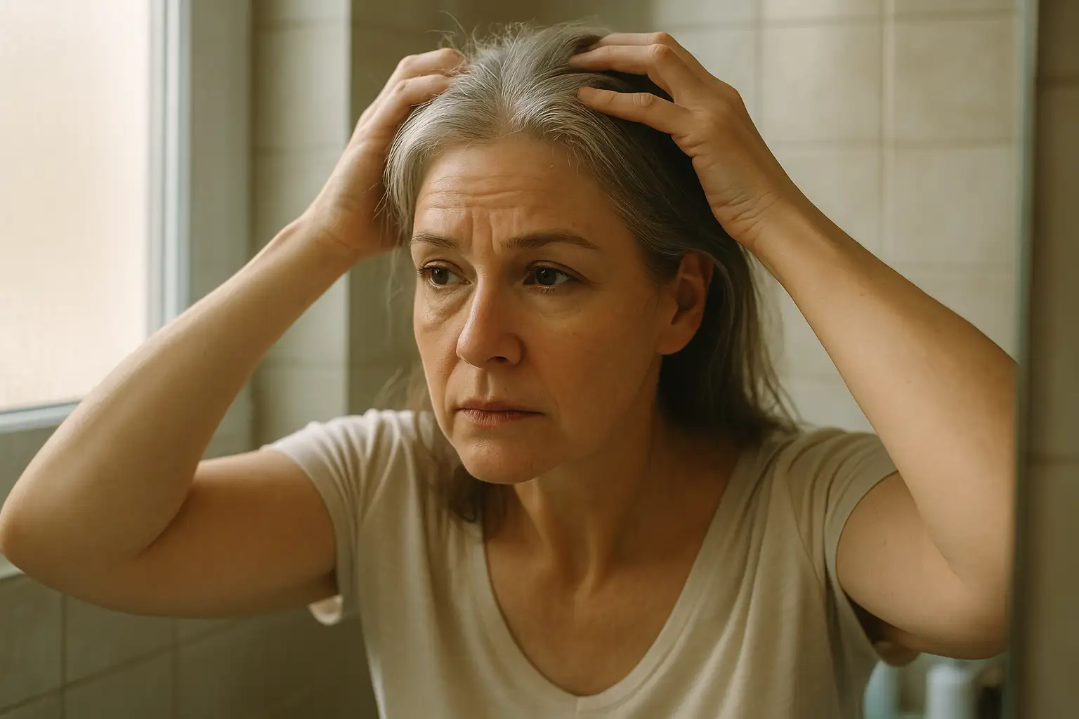
Women often share that these changes feel personal. Hair plays a significant role in identity and confidence, and any change in its texture or fullness can raise concerns about appearance, aging, or overall health. Understanding the science behind these shifts helps relieve some of that concern. Menopause places your hair under new hormonal conditions, and your follicles need time and support to adjust. When we look at hair thinning together, my goal is always to acknowledge the emotional experience while guiding you through evidence-based solutions.
Some women notice thinning gradually, while others see a more sudden change. You may find more strands in your brush or discover new areas of scalp visibility. These changes do not mean your hair cannot recover. Many factors influence the pattern and pace of menopausal thinning, and identifying those factors is the first step in forming a topical treatment plan that fits your needs. With proper support, your hair can regain strength and improved density over time.
Common Causes of Hair Thinning During Menopause, Including Androgenetic Alopecia
Hormonal shifts are central to menopausal thinning, but they are not the only contributors. A comprehensive evaluation helps determine which factors are influencing your symptoms, allowing us to address them effectively.
One of the most common causes of thinning during menopause is androgenetic alopecia. This pattern of hair loss results from an increased sensitivity of the follicles to androgens. As estrogen decreases, androgens gain more influence, which can lead to gradual thinning along the crown or part line. Many women experience this pattern during midlife, and while it can progress over time, it often responds well to targeted treatment.
Another factor we consider is telogen effluvium, a condition where a larger number of hairs enter the resting phase at the same time. This often occurs during periods of stress or hormonal change. Women going through menopause sometimes experience this type of shedding for several months. The good news is that this form of thinning is often temporary and can improve with supportive care and restoration of balance.
Other contributors can include thyroid fluctuations, iron deficiency, vitamin D deficiency, or changes in dietary habits. Some women experience increased inflammation on the scalp, which can also influence shedding and overall hair quality. When you come in, we talk through your health history, nutrition patterns, medications, lifestyle, and stress load. This helps me identify what may be driving your thinning so we can take a targeted and practical approach.
Every woman’s experience is a little different. By understanding what is behind your thinning, we can choose treatments that support your hair health from the inside out.
Menopause Hair Thinning Causes: Hormones & Androgenetic Alopecia
Once we understand the cause of your thinning, we can select treatments that support hair growth and help slow further loss. Many women see improvements with a combination of medical therapy, topical products, and lifestyle adjustments. Treatment works best when it is tailored to the specific factors affecting your hair.
Minoxidil is one of the most widely used topical treatments for menopausal thinning. It helps improve blood flow to the scalp and supports follicles that have shifted into a resting phase. When used consistently, minoxidil can help increase density and improve the growth cycle. Many women notice reduced shedding and stronger regrowth after several months of regular use. I often recommend this option because it is accessible, well studied, and safe for many women.
Another option I discuss with patients is spironolactone, a medication that helps reduce the effect of androgens on the hair. Since androgen sensitivity plays a large role in menopausal thinning, spironolactone can be especially helpful for women with female-pattern hair loss. This medication works gradually and can help decrease shedding and improve fullness with time. As with any prescription, we review your health history to ensure it is appropriate for you.
In some cases, we may also talk about PRP therapy. This treatment uses a patient’s own platelet-rich plasma to stimulate the follicles. PRP can be useful for women who want an in-office treatment that supports growth and complements topical and oral therapies. It is not required for everyone, but it is a helpful option for certain cases where additional support is needed.
Topical treatments, oral medications, and in-office therapies can all work together to support your follicles and improve hair strength. I make treatment recommendations based on your specific pattern of loss, your comfort level, and your overall health. The goal is to help you regain confidence while setting realistic expectations for progress.
Supporting Hair Health Through Lifestyle, Scalp Care, and Daily Habits
Supporting your hair through lifestyle choices is just as important as medical treatment. Your scalp and follicles respond to the way you nourish your body, manage stress, and care for your hair each day.
Nutrition plays a significant role in hair growth. During menopause, your body’s nutrient demands may shift. Ensuring adequate intake of iron, vitamin D, protein, and biotin can support stronger strands. If needed, we can check your levels and determine whether supplementation is appropriate. Small changes in diet sometimes make a noticeable difference in hair quality.
Stress management is another important component. Chronic stress can contribute to shedding by disrupting the normal hair cycle. Gentle movement, adequate sleep, and daily relaxation practices can help reduce the impact stress has on your hair. Even a few minutes of deep breathing, stretching, or grounding each day can support a healthier balance.
Scalp care is often overlooked, yet it directly supports the environment where your hair grows. Regular scalp massages improve circulation and help your treatments work more effectively. Choosing gentle, sulfate-free shampoos reduces irritation and keeps your scalp clean without stripping moisture. Some women benefit from targeted scalp treatments that reduce inflammation or support hydration.
Working through these lifestyle areas alongside your medical treatment creates a balanced approach that helps your hair grow stronger and more resilient over time. I guide you through each step so you feel supported in your choices and understand how they contribute to the progress you see.
Personalized Hair Wellness Strategies at Thrive Medicine Clinic
Every woman’s hair responds differently to menopause, and your treatment plan should reflect that. At Thrive Medicine Clinic, I take time to understand your symptoms, your concerns, your goals, and your health background. This allows us to build a plan that fits your life rather than offering a one-size approach.
Your plan may include topical support, oral medications, in-office therapies, nutritional guidance, or practical changes to your daily routine. We adjust based on your progress and how your hair responds. You are never expected to work through these changes alone. My focus is always to provide education, reassurance, and personalized support through each step of the process.
Hair thinning is common during menopause, but you do not have to navigate it without guidance. With the right care, many women regain fuller hair, healthier strands, and renewed confidence. If you are ready to take a step forward, I welcome you to schedule a consultation at Thrive Medicine Clinic in Houston Heights.
Together, we can create a plan that supports your hair wellness and helps you feel like yourself again.