
Perimenopause is a natural stage that brings a wide range of physical, mental, and emotional changes. Many women notice shifts in weight, sleep, energy, and mood as hormones fluctuate. At Thrive Medicine Clinic in Houston Heights, we provide medical guidance, advanced treatment options, and individualized support to help you manage these changes with clarity and confidence.
Understanding Perimenopause and Why Symptoms Feel So Different
Perimenopause is the gradual transition before menopause when hormone levels begin to shift. These changes affect each woman differently, and the experience can vary from month to month. Estrogen levels rise and fall unpredictably, which often influences menstrual patterns, energy, sleep, temperature regulation, and emotional resilience.
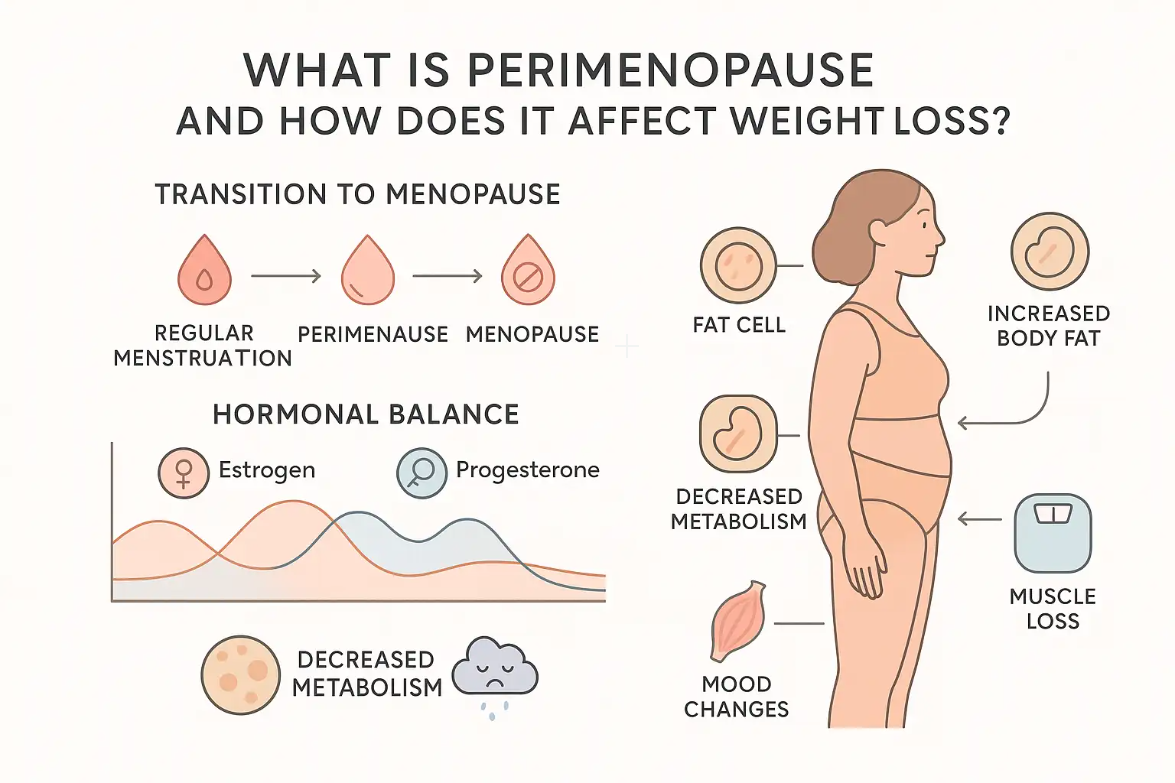
Some women notice subtle changes in the beginning, while others feel significant disruptions. Irregular periods, hot flashes, night sweats, and mood fluctuations are common. Weight gain around the abdomen may appear even with consistent healthy habits. Many patients describe mental fog, increased stress, or unpredictable emotional reactions as hormones fluctuate.
At Thrive Medicine Clinic, we evaluate the full picture. This includes your symptom history, lifestyle factors, medical background, and family patterns. Understanding what is contributing to your symptoms lets us develop a plan that supports your daily comfort, health, and long-term well-being.
How Hormonal Changes Influence Weight, Sleep, and Daily Function
Hormones guide important processes related to metabolism, appetite, temperature regulation, sleep cycles, and emotional patterns. During perimenopause, estrogen and other hormones shift irregularly, which can make healthy routines feel less effective.
Many women tell us they follow their usual diet and exercise habits but notice slower progress or unexpected weight gain. Hormonal patterns can change how the body stores fat, particularly around the midsection. These shifts can also reduce muscle mass and alter insulin sensitivity, making weight management more challenging.
Sleep disturbances are another common concern. Hot flashes, night sweats, or restless thoughts may interrupt rest. Poor sleep affects appetite, mood, and motivation, creating a cycle that makes symptoms feel harder to manage.
Emotional and mental symptoms are also linked to hormone fluctuations. Some women describe heightened anxiety, irritability, or episodes of sadness that feel out of character. Others mention difficulty concentrating or staying focused during daily tasks.
At our Houston Heights clinic, we address these changes with a balanced strategy that includes medical evaluation, lifestyle support, and targeted treatments when needed. Our goal is to help you regain control of your health in ways that feel practical and sustainable.
Common Signs and Symptoms Women Experience During Perimenopause
While symptoms vary, many patients report noticing several patterns as hormones fluctuate. These may include:
Irregular, lighter, or heavier periods
Symptoms often appear gradually and can increase or decrease at different points. Understanding what you are experiencing helps determine whether symptoms are typical or whether additional medical testing is recommended. At Thrive Medicine Clinic, we walk you through each symptom and help you understand how hormonal patterns may be involved.
What Causes Perimenopause and Why Symptoms Vary So Widely
Hormonal shifts begin naturally as the ovaries produce less estrogen over time. Age plays an important role, but genetics, lifestyle factors, and medical history also influence the transition. Some women notice changes in their late 30s, while others begin experiencing symptoms closer to their 50s.
These hormone changes do not move in predictable patterns. Levels can be high one month and low the next, which explains the inconsistencies in mood, sleep, temperature control, and menstrual cycles. This irregularity also affects how your body responds to diet, exercise, stress, and medications.
Genetics often play a part as well. If family members experienced early perimenopause or more intense symptoms, you may have a similar experience. Your body’s sensitivity to hormonal changes is shaped by inherited patterns, and this can influence the intensity of symptoms such as hot flashes, emotional ups and downs, or irregular cycles.
Understanding the cause behind your symptoms helps us create a supportive care plan. Our clinic guides patients through this process with a mix of assessment, symptom tracking, and medical evaluation.
How Perimenopause Differs From Menopause
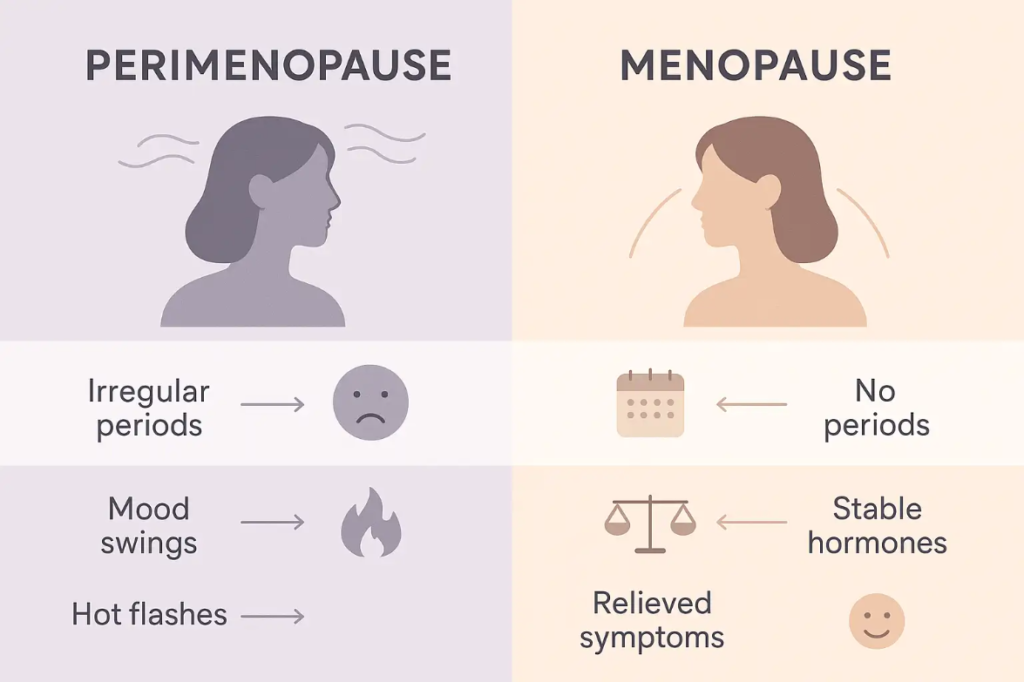
Perimenopause is the active transition before menopause. During this stage, hormone levels shift irregularly, and menstrual cycles change. Some women have months with no period followed by a stretch of heavier or longer cycles.Menopause is reached when you have gone twelve consecutive months without a period. At that point, menstruation has stopped, and hormone levels remain consistently lower. While some symptoms may continue for a period of time, the unpredictable swings that define perimenopause treatment begin to settle.
The distinction matters because treatment strategies often differ depending on your stage in the transition. At Thrive Medicine Clinic, we assess where you are in this process so we can tailor care in ways that support your specific needs.
When Perimenopause Testing May Be Helpful
Testing is not required for every woman, but it can provide clarity when symptoms feel unclear or unusually intense. Our providers may recommend evaluation if you experience:
Testing may include a review of menstrual patterns, symptom history, and bloodwork that tracks hormone levels over time. Hormones can fluctuate day to day, so we look for trends rather than isolated values. Testing can also rule out other medical conditions that mimic perimenopause symptoms.
These insights help determine which treatment approach may be most effective and whether additional support is needed.
Treatment Options Tailored to Your Symptoms and Goals
Every woman’s experience is different, so treatment should match your symptoms, lifestyle, and health goals. At Thrive Medicine Clinic, we focus on care strategies that support hormonal balance, improve comfort, and restore quality of life.
Treatment plans may include:
We review your medical history, evaluate your symptoms, and create a plan that matches your needs. Our approach is designed to help you regain energy, support weight management, and improve daily comfort throughout this transition.
Lifestyle Changes That Support Hormonal Balance and Well-being
Lifestyle habits play a meaningful role in how your body manages hormone shifts. Small adjustments can make symptoms more manageable and improve your overall wellbeing.
Nutrition is a strong foundation. Balanced meals with lean proteins, whole grains, healthy fats, and vegetables help regulate energy and support metabolic health. Reducing added sugar, moderating alcohol, and staying hydrated often improve symptoms such as hot flashes or mood fluctuations.
Consistent physical activity helps with weight management, emotional resilience, and sleep quality. Strength training supports muscle mass, which can decline during perimenopause. Cardiovascular activity supports heart health and helps regulate stress hormones.
Sleep habits are equally important. Creating a cool, dark sleep environment helps with night sweats. A calming routine before bed supports more restful sleep. Relaxation techniques, such as breathing exercises or mindfulness, can ease nightly interruptions and daytime stress.
Our clinic can help you select lifestyle strategies that align with your symptoms, schedule, and health goals.
When to Seek Professional Care and How We Support You
If symptoms begin to interfere with your daily life, relationships, or long-term health, professional support can make a meaningful difference. Signs that it may be time to seek care include:
Our approach at Thrive Medicine Clinic is centered around listening, evaluating, and supporting you with strategies that match your needs. Early care helps prevent symptoms from escalating and gives you a clear path toward feeling better.
If you’re ready to take the next step toward symptom relief and renewed health, our team is here to support you. Contact our Houston Heights clinic to schedule a consultation and learn how a tailored plan can help you feel more balanced and supported throughout your perimenopause transition.
Frequently Asked Questions
Perimenopause can cause a range of symptoms, which might include:
● Irregular or heavier periods
● Hot flashes and night sweats
● Mood swings and irritability
● Sleep disturbances
● Weight gain, especially around the abdomen
● Mental fog or trouble concentrating
Each woman’s experience is unique, and symptoms can vary in severity and duration.
Hormonal changes, especially fluctuating estrogen levels, can slow metabolism and alter how the body stores fat. This often leads to weight gain or makes it harder to lose weight, even with diet and exercise. Factors like sleep disruption, fatigue, and emotional shifts also play a big role in weight management during perimenopause.
At Thrive Medicine Clinic in Houston Heights, we offer holistic strategies including:
● Nutrition and exercise counseling
● Hormonal and non-hormonal therapies
● Advanced support like Tirzepatide for weight loss, especially when standard methods aren’t effective
● Guidance for emotional and mental well-being
Your care plan will be tailored to your symptoms, history, and needs.
If your symptoms, like unmanageable hot flashes, persistent weight gain, irregular periods, disrupted sleep, or mood changes, are interfering with everyday life, it’s time to get help. We suggest reaching out if your efforts at healthy living aren’t working or if your symptoms cause distress at home or work.
Tirzepatide is a newer medication used to support weight loss, especially in women who are struggling despite diet and exercise. It works by targeting hormone pathways involved in appetite and metabolism. At Thrive Medicine Clinic in Houston Heights, we offer Tirzepatide as part of personalized plans for patients frustrated by perimenopause-related weight changes.