
If you’ve been searching for accurate testosterone testing, you may already suspect your hormone levels could be affecting how you feel. Changes in energy, strength, or focus can often be traced back to hormone balance. Testing is the only way to confirm whether low testosterone is playing a role and to plan safe, effective treatment.
At Thrive Medicine Clinic in Houston, men can complete testing easily through in-clinic visits or local lab partnerships. Under the care of Dr. Rhet Langley, MD and Dr. Phillip Gallegos MD, every test is reviewed personally, ensuring you get clear results and a straightforward plan for what comes next. Whether you’re looking to confirm symptoms, track ongoing therapy, or simply understand your numbers, testing is the foundation for informed, confident care.
Why a Testosterone Test Matters for Men’s Health
Testosterone affects nearly every system in the body. It supports energy, focus, muscle strength, and sexual health. When levels drop, men often experience subtle but persistent changes that impact daily performance and well-being.
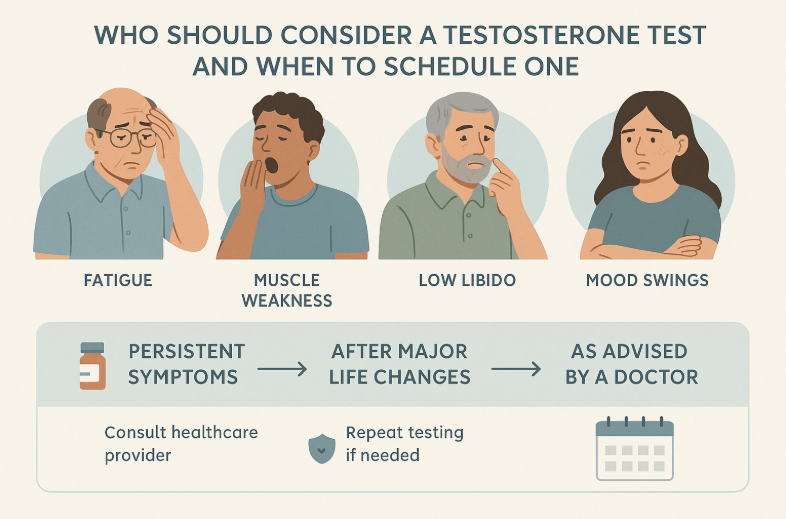
Testing matters because:
● Symptoms of low testosterone can mimic other health issues.
● Early detection helps prevent long-term fatigue, mood changes, and muscle loss.
● Accurate lab results guide treatment decisions and dosage.
● Regular follow-up testing ensures therapy stays safe and effective.
The most reliable method for checking hormone levels is a blood test that measures both total and free testosterone. Total testosterone reflects the overall amount in your system, while free testosterone shows how much is actively available for use.
At Thrive Medicine Clinic, testing is handled with precision. Dr. Langley and Dr. Gallegos reviews each result to ensure accuracy and provides clear explanations. There is no medical jargon, just straightforward information about what your numbers mean and what you can do next.
When to Get Tested and What Symptoms to Watch For
Men of all ages can experience changes in testosterone, though it becomes more common with age. Levels naturally decline by about 1% per year after the age of 30. For some, this shift is mild; for others, it causes noticeable differences in how they feel and function.
Common signs it’s time to get tested include:
Because these symptoms can overlap with stress or lifestyle factors, testing provides clarity. It’s a quick, objective way to see whether low testosterone might be contributing to how you feel.
You don’t need to wait until symptoms become severe. Men who are proactive about testing often make adjustments earlier, through hormone therapy, nutrition, or other treatments, and maintain better long-term health.
At Thrive Medicine Clinic, testing is available for both new and returning patients. You can book an appointment online, complete your lab work in the clinic or at a nearby LabCorp, and receive your results directly from Dr. Langley and Dr. Gallegos within days.
What Happens During a Comprehensive Testosterone Blood Test
A testosterone test is simple, fast, and safe. The entire process usually takes less than 15 minutes. At Thrive Medicine Clinic, we make testing easy whether you prefer to come in person or schedule it through a local lab.
Here’s what to expect:
1. Consultation
You’ll start with a discussion about your symptoms and overall health. This helps your provider determine whether additional tests are needed alongside testosterone measurement, such as thyroid or metabolic panels.
2. Blood Draw
A small blood sample is taken, typically from your arm. The test is done in the morning, when testosterone levels are at their highest.
3. Laboratory Analysis
Your sample is processed to measure total and free testosterone levels, as well as any related hormones if requested.
4. Results Review
When the results are ready, Dr. Langley and Dr. Gallegos review them with you directly either in-clinic or by telehealth. You’ll get a full explanation of what your numbers mean, where they fall within the healthy range, and what next steps are appropriate.
5. Follow-Up or Treatment Planning
If your testosterone levels are normal, you’ll receive reassurance and guidance on maintaining hormone health. If they’re low, Dr. Langley and Dr. Gallegos will outline a treatment plan that fits your lifestyle, such as testosterone replacement therapy (TRT) or other evidence-based solutions.
Testing is always conducted under physician oversight to ensure accuracy and safety. You’ll never have to interpret your results alone or rely on online estimates. Every recommendation is based on real data, reviewed by a licensed medical professional.
Understanding Your Test Results and What They Mean
Interpreting testosterone results is more complex than reading a single number. “Normal” ranges can vary depending on age, lifestyle, and lab standards. That’s why medical review is essential.
In general, healthy total testosterone levels for adult men range from 300 to 1,000 ng/dL, though some men experience symptoms at higher or lower points within that range. Free testosterone the unbound hormone that’s biologically active is also a key factor and typically makes up 1% to 3% of total testosterone.
Here’s how results are typically categorized:
At Thrive Medicine Clinic, you’ll never be given a one-size-fits-all interpretation. Dr. Langley and Dr. Gallegos explain your results in plain language, comparing your numbers to your symptoms, age, and medical history.
You’ll also learn about related lab markers that influence testosterone balance, such as:
This full-picture review helps identify the cause of low levels, whether from natural aging, lifestyle, or underlying medical conditions, and determines the best path forward.
Next Steps and How Thrive Medicine Clinic Can Help
Once you have your results, the next step is deciding whether treatment is right for you. If testosterone levels are low and symptoms are present, medically supervised therapy can help restore balance safely.
At Thrive Medicine Clinic, Dr. Langley and Dr. Gallegos develop a personalized treatment plan based on your specific results. Your options may include:
Treatment is never started without confirmation through lab testing and direct medical review. Once therapy begins, follow-up testing ensures hormone levels stay within the target range and that your plan remains safe.
Ongoing support includes:
In addition to TRT, Dr. Langley and Dr. Gallegos offer practical advice on supporting hormone health through sleep, nutrition, and fitness. For some men, simple changes can complement therapy and improve results over time.
Men who begin testosterone therapy under proper supervision often report steady improvements in energy, concentration, and overall mood. With accurate testing and medical oversight, these changes are measurable and sustainable.
At Thrive Medicine Clinic, every step, from testing to treatment, is designed for clarity, safety, and convenience. You’ll always know what’s happening and why each recommendation is being made.
Schedule Your Testosterone Test with Thrive Medicine Clinic [
If you’ve been feeling tired, unfocused, or not yourself lately, it may be time to check your hormone levels. Testosterone testing is the first step toward understanding what’s going on and taking control of your health.
At Thrive Medicine Clinic, you can:
You don’t need to guess what’s behind your symptoms. A simple blood test can provide clear answers and set you on the path to feeling stronger, sharper, and more confident again.