
Urinary leakage after prostate surgery can affect exercise, work, sleep, travel, confidence, and everyday routines.
For many men, bladder control gradually improves during recovery. Others continue using pads or experiencing leakage when standing, coughing, lifting, walking, or exercising.
The pelvic-floor muscles play an important role in urinary control after prostate surgery.
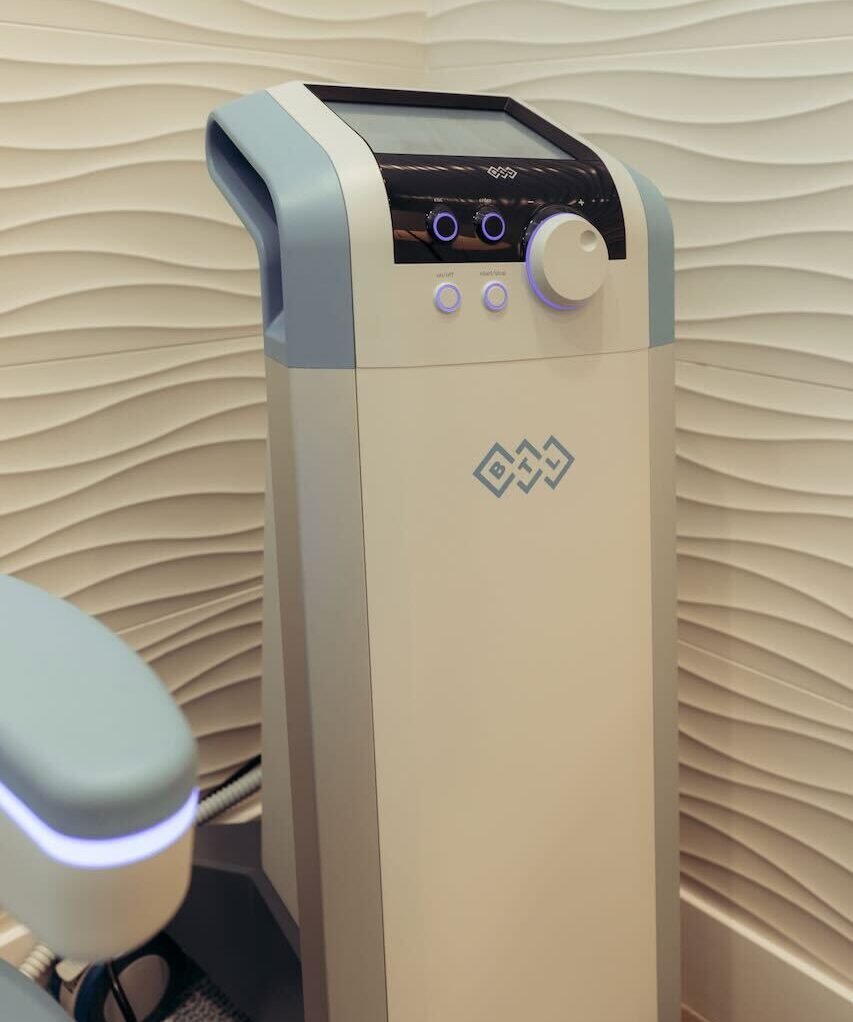
EMSELLA uses high-intensity focused electromagnetic technology to stimulate those muscles while you remain seated and fully clothed.
Thrive Medicine Clinic offers EMSELLA in Houston Heights for men interested in a noninvasive pelvic-floor rehabilitation option for urinary-incontinence concerns.
Can Men Use EMSELLA After Prostate Surgery?
Yes. EMSELLA’s intended use includes rehabilitation of weak pelvic-floor muscles and restoration of neuromuscular control for male and female urinary incontinence. (bodybybtl.com)
A 2025 study specifically evaluated EMSELLA in 27 men with persistent urinary incontinence after radical prostatectomy.
The men completed six HIFEM sessions, and researchers reported improvement in urinary-incontinence symptom scores and reduced daily pad use after the treatment series and again at one-month follow-up. (pubmed.ncbi.nlm.nih.gov)
That research is encouraging, but it is still a relatively small study.
EMSELLA should therefore be presented as a noninvasive rehabilitation option worth discussing, not a guaranteed solution for every man with post-prostatectomy leakage.
Why Can Prostate Surgery Affect Bladder Control?
Urinary control in men depends on several structures working together.
These include:
Radical prostatectomy removes the prostate gland and can affect structures involved in urinary control.
The American Urological Association notes that urinary incontinence is expected in the short term after radical prostatectomy and generally improves toward baseline during the first year, although some men continue to experience leakage that requires further care. (auanet.org)
A 2026 systematic review involving more than 10,000 participants also confirmed that urinary incontinence remains an important functional complication following radical prostatectomy. (pubmed.ncbi.nlm.nih.gov)
The amount and duration of leakage can differ significantly from one man to another.
Common Ways Urinary Leakage Shows Up
Men recovering from prostate surgery may notice leakage:
Some men use one light pad.
Others may need several pads each day.
A 2026 study involving more than 2,000 men after radical prostatectomy found that pad use correlated strongly with measured urine loss, which supports using pad use as one practical way to monitor recovery. (pubmed.ncbi.nlm.nih.gov)
But pad count alone does not explain why leakage is occurring.
That is why persistent symptoms may require urologic evaluation.
How Does the Pelvic Floor Help Men Control Urine?
Men have pelvic-floor muscles too.
These muscles help support the pelvic organs and contribute to urinary control.
After prostate surgery, learning to properly activate and coordinate these muscles is an established part of continence rehabilitation.
The American Urological Association recommends offering pelvic-floor muscle exercises or pelvic-floor muscle training during the immediate postoperative period after radical prostatectomy. (auanet.org)
EMSELLA works on the same general muscle group using a different approach.
Instead of relying entirely on voluntary contractions, the chair uses electromagnetic stimulation to create repeated pelvic-floor muscle contractions while you remain seated.
How Does EMSELLA Stimulate the Male Pelvic Floor?
EMSELLA uses HIFEM® technology to stimulate deep pelvic-floor musculature.
During the session, electromagnetic energy causes repeated involuntary muscle contractions.
BTL states that these contractions are intended to:
(bodybybtl.com)You remain seated and fully clothed during the session.
There are:
EMSELLA is a strengthening and neuromuscular-rehabilitation technology.
It does not diagnose the cause of urinary leakage.
EMSELLA for Post-Prostatectomy Incontinence
The most directly relevant published study evaluated 27 men with persistent urinary incontinence after radical prostatectomy.
Participants completed:
Researchers measured:
Both improved significantly after the session series.
Improvements were still present at the one-month follow-up.
The researchers concluded that HIFEM showed promise as a noninvasive option for post-prostatectomy incontinence while also stating that larger studies with longer follow-up are needed. (pubmed.ncbi.nlm.nih.gov)
That final point matters.
One small study does not establish that every man after prostate surgery will experience the same result.
Can EMSELLA Reduce the Number of Pads I Use?
Reduced pad use was one of the outcomes in the 2025 male EMSELLA study.
The 27 men in the study used fewer pads after completing six sessions, with further improvement measured at one-month follow-up. (pubmed.ncbi.nlm.nih.gov)
That makes pad use a practical measure to track.
Before beginning therapy, consider documenting:
Then compare those same measures during follow-up.
The goal is meaningful improvement in bladder control, not simply completing six appointments.
Does EMSELLA Replace Pelvic-Floor Exercises?
No.
Pelvic-floor exercises remain an established part of continence rehabilitation after radical prostatectomy.
The American Urological Association recommends pelvic-floor muscle exercises or training during the immediate postoperative period. (auanet.org)
Kegels require you to voluntarily identify, contract, and relax the correct muscles.
EMSELLA creates repeated contractions using electromagnetic stimulation.
The two approaches are different.
EMSELLA may be particularly interesting for a man who:
Learning voluntary pelvic-floor control may still remain important.
Should Men Still Consider Pelvic-Floor Physical Therapy?
Yes.
Pelvic-floor physical therapy can provide something EMSELLA cannot:
individualized functional assessment and training.
A men’s pelvic-health therapist can evaluate:
Therapy may also teach you how to activate the pelvic floor during coughing, lifting, standing, and other activities that trigger leakage.
EMSELLA specifically provides electromagnetic muscle stimulation.
For some men, these approaches may complement one another.
When Can I Start EMSELLA After Prostate Surgery?
There should not be one universal start date on this page.
Recovery differs based on:
The American Urological Association recommends beginning pelvic-floor muscle exercises or training in the immediate postoperative period, but that recommendation does not automatically determine when an EMSELLA session should begin. (auanet.org)
Thrive should confirm:
Thrive should add its actual post-surgery timing protocol once confirmed.
How Long Can Continence Recovery Take?
Urinary leakage is common during the early recovery period after radical prostatectomy.
Continence can continue improving for months.
The American Urological Association states that continence generally improves toward baseline by 12 months, although some men have persistent leakage requiring additional therapy. (auanet.org)
That means leakage several weeks after surgery and leakage one year after surgery do not necessarily represent the same clinical situation.
Timing matters when deciding how aggressively persistent incontinence should be evaluated or managed.
Still Using Pads After Prostate Surgery?
You do not need to decide on your own whether your leakage is simply part of recovery or whether another rehabilitation option should be considered.
Thrive Medicine Clinic can review your symptoms, surgical history, current pelvic-floor program, and goals and discuss whether EMSELLA may fit your recovery plan.
How Many EMSELLA Sessions Are Used for Men?
BTL’s standard EMSELLA protocol generally consists of six approximately 30-minute sessions scheduled twice per week. (bodybybtl.com)
The 2025 male post-prostatectomy study used:
Six sessions
28 minutes per session
Two sessions per week
This provides a useful clinical reference.
It does not mean every man automatically requires the exact same plan.
Thrive should confirm its actual male EMSELLA protocol before publication.
When Could Bladder Control Improve?
Some men may notice changes during the session series.
In the published post-prostatectomy study, researchers evaluated outcomes after the sixth session and again one month later.
Urinary-incontinence symptom scores and pad use improved after the series and showed further improvement at follow-up. (pubmed.ncbi.nlm.nih.gov)
This suggests that improvement can continue after the final appointment.
Individual response will vary.
Read: EMSELLA Results: Does It Work, How Many Sessions & How Long Does It Last?
Persistent Incontinence Needs Reassessment
Not all urinary leakage after prostate surgery is caused by pelvic-floor weakness alone.
Men can experience:
Longstanding research has shown that some men with post-prostatectomy incontinence have bladder dysfunction in addition to stress leakage. (pubmed.ncbi.nlm.nih.gov)
That is why persistent symptoms should not automatically lead to:
“Just do more EMSELLA.”
If leakage remains significant, the appropriate next step may be reassessment by a urologist.
Symptoms That Need Urologic Evaluation
EMSELLA should complement appropriate medical follow-up, not replace it.
Contact your urologist or appropriate medical provider if you experience:
Persistent bothersome leakage also deserves follow-up.
The AUA recommends evaluating men after prostate therapy using history, physical examination, and appropriate diagnostic testing to identify the type and severity of incontinence. (auanet.org)
When Are Other Incontinence Therapies Considered?
Some men continue to have significant stress urinary incontinence despite conservative rehabilitation.
The AUA guideline states that surgery may be offered as early as six months after prostate therapy when bothersome stress incontinence is not improving despite conservative therapy.
For persistent bothersome stress urinary incontinence at one year, clinicians should offer surgical therapy. (auanet.org)
Surgical options can include approaches such as:
depending on severity, anatomy, prior therapy, and urologic evaluation.
EMSELLA should not be used to delay appropriate urologic care when leakage remains significant.
What Should Men Expect During EMSELLA?
You remain fully clothed and seated on the EMSELLA chair.
During the session, you may feel:
The contractions happen automatically in response to the electromagnetic stimulation.
There are:
BTL states that clients can resume normal activities after a session. (bodybybtl.com)
When May EMSELLA Be Worth Discussing?
EMSELLA may be worth discussing if you:
An evaluation is still important because urinary incontinence after prostate surgery can have different causes.
When Might EMSELLA Not Be Appropriate?
BTL states that EMSELLA should not be used in people with certain electronic or metal implants. (bodybybtl.com)
Men considering EMSELLA should tell Thrive about:
If you recently underwent prostate surgery, coordinate the timing with your urologic recovery plan.
Does EMSELLA Treat Erectile Dysfunction?
This page should not position EMSELLA as an erectile-dysfunction therapy.
Radical prostatectomy can affect both urinary control and sexual function, but those are separate recovery issues.
EMSELLA’s cleared intended use centers on pelvic-floor rehabilitation and urinary incontinence in men and women. (bodybybtl.com)
Pelvic-floor rehabilitation may be discussed as one part of broader recovery, but men concerned about erections, penile rehabilitation, climacturia, or sexual function should discuss those concerns with their urologist.
Do not promise sexual-function improvement simply because pelvic-floor muscles are being stimulated.
EMSELLA for Men in Houston Heights
Men recovering from prostate surgery in Houston have access to urologists, pelvic-floor therapists, cancer centers, and continence specialists.
Thrive Medicine Clinic should not compete with those resources by pretending EMSELLA replaces them.
The stronger role is helping appropriately selected men understand where noninvasive pelvic-floor stimulation may fit within their recovery.
The conversation can include:
From there, Thrive can discuss whether EMSELLA is a reasonable addition to your rehabilitation plan.
Location:
Thrive Medicine Clinic
802 W 18th St
Houston, TX 77008
Frequently Asked Questions About EMSELLA for Men After Prostate Surgery
Can men use EMSELLA?
Yes. BTL states that EMSELLA is intended for rehabilitation of weak pelvic-floor muscles and restoration of neuromuscular control for male and female urinary incontinence. (bodybybtl.com)
Can EMSELLA help urinary leakage after radical prostatectomy?
A 2025 study of 27 men with persistent post-prostatectomy incontinence reported significant improvements in urinary-incontinence scores and daily pad use after six EMSELLA sessions and at one-month follow-up. Larger and longer studies are still needed. (pubmed.ncbi.nlm.nih.gov)
Why do men leak urine after prostate removal?
Prostate surgery can affect the sphincter, pelvic-floor muscles, nerves, bladder function, and other structures involved in urinary control. The cause and severity vary by individual.
How long is urinary leakage normal after prostate surgery?
Continence often improves gradually during the first year after radical prostatectomy. The AUA notes that recovery generally approaches baseline by 12 months, although some men have persistent incontinence requiring further therapy. (auanet.org)
When can I start EMSELLA after prostate surgery?
There is no universal start date. Healing, catheter removal, complications, and your urologist’s recommendations should be considered before starting EMSELLA.
Does EMSELLA replace Kegel exercises?
No. Pelvic-floor exercises remain an established part of post-prostatectomy continence rehabilitation. EMSELLA provides electromagnetic muscle stimulation rather than voluntary contractions.
Does EMSELLA replace pelvic-floor physical therapy?
No. Physical therapy can assess muscle function, coordination, breathing, pressure management, movement, and voluntary control. EMSELLA specifically stimulates the pelvic-floor muscles.
How many sessions are typically used?
BTL’s standard protocol commonly uses six sessions. The published male post-prostatectomy study also used six 28-minute sessions performed twice weekly. (pubmed.ncbi.nlm.nih.gov)
When might I notice improvement?
The male study reported improvement after the six-session series, with additional improvement measured at one-month follow-up. Individual response varies.
Can EMSELLA reduce pad use?
Reduced pad use was one of the outcomes reported in the published 2025 male post-prostatectomy study. (pubmed.ncbi.nlm.nih.gov)
Is EMSELLA permanent?
Permanent results should not be promised. Continence recovery can change with time, muscle function, health, additional rehabilitation, and the underlying cause of leakage.
What if I still leak after EMSELLA?
Persistent leakage should be reassessed rather than automatically adding more sessions. Your urologist may need to determine whether stress incontinence, bladder dysfunction, urgency, or another factor is contributing.
When should surgery for incontinence be discussed?
The AUA states that surgery may be offered as early as six months when bothersome stress incontinence is not improving despite conservative therapy and should be offered for persistent bothersome stress incontinence at one year. (auanet.org)
Does EMSELLA hurt?
BTL describes tingling and repeated pelvic-floor contractions during the session. Intensity can be adjusted. Uncomfortable pain should be reported immediately. (bodybybtl.com)
Do I have to undress?
No. You remain fully clothed while seated on the EMSELLA chair.
Is there downtime?
BTL states that normal daily activities can generally resume immediately after an EMSELLA session. (bodybybtl.com)
Does EMSELLA treat erectile dysfunction?
EMSELLA’s cleared intended use centers on pelvic-floor rehabilitation and urinary incontinence. Erectile dysfunction after prostate surgery should be discussed separately with your urologist.
Explore EMSELLA After Prostate Surgery in Houston Heights
Bladder leakage after prostate surgery can improve over time, but persistent symptoms can interfere with exercise, work, travel, sleep, and confidence.
Pelvic-floor rehabilitation is an important part of continence recovery.
If you are still experiencing leakage and want to explore a noninvasive pelvic-floor stimulation option, Thrive Medicine Clinic can review your surgical history, current symptoms, rehabilitation plan, and goals and discuss whether EMSELLA may be appropriate.